

WHY CHOOSE FABON ENGINEERING PVT. LTD. – YOUR PARTNER FOR BIOMASS, FEED & RENEWABLE MACHINERY
Introduction
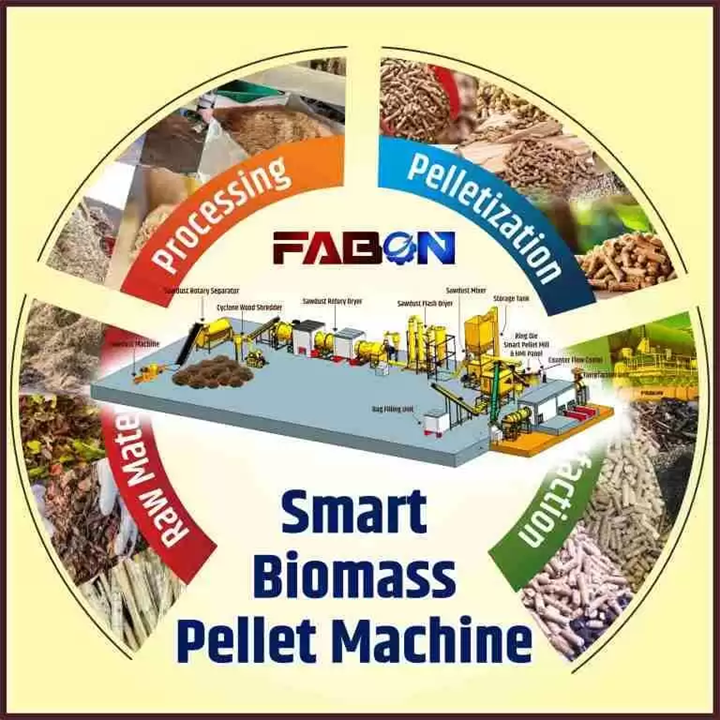
In today’s rapidly evolving industrial landscape—from biomass fuel production and agricultural waste valorisation to advanced animal‑feed manufacturing and sustainable energy solutions—companies need a dependable engineering partner. That partner is FABON Engineering Pvt. Ltd., an Indian manufacturer and exporter of high‑quality machinery and turnkey plants in the biomass, feed, fertilizer and renewable energy space.
Whether you are a feed mill operator, poultry farmer, biomass‐entrepreneur, pellet‐fuel producer or industrial plant seeking sustainable heating or drying solutions, FABON offers robust machines, customised plants, automation and global export experience.
In this blog we’ll explore:
- The company’s background & credentials
- Key product categories and how they serve your business
- Technological differentiators and innovation
- Customer benefits & case‑use scenarios
- Quality, support, after‑sales and global reach
- Sustainability & future growth trends
- Why investing in FABON makes business sense
- How to choose the right system from FABON
- Tips for installation, operation & ROI
- Conclusion and call to action
By the end of this article, you’ll clearly understand why FABON is a smart, strategic choice and how you can leverage their offerings to grow your operations, improve efficiency and reduce costs.
1. Company Overview & Credentials
1.1 History & Mission
Founded in 2006 in Navi Mumbai, Maharashtra, India, FABON Engineering has grown into a trusted name for machinery in the biomass, agricultural and feed sectors. Fabon+2Fabon+2
From the outset the mission has been: to deliver error‑free engineering services that meet highest standards of quality, efficiency and cost‑effectiveness. Fabon+1
The vision is to be a leading provider of engineering and mechatronic solutions driving the transition to green energy, empowering sustainable practices and reducing environmental impact. Fabon+1
1.2 Location & Foundation
While originally in Navi Mumbai, the company is now headquartered in Nashik, Maharashtra at:
Sr. No. 153, Ambad‑Gavalana Road, Behind D Mart, NH03, Pathardi, Nashik – 422010. Fabon+1
They have built robust manufacturing infrastructure, in‑house fabrications, CNC bending/press brake capacity, assembly lines and quality control systems. Fabon Engineering Pvt. Ltd.+1
1.3 Certification & Trust Signals
FABON is ISO 9001:2015 certified which underlines its commitment to quality management systems. Fabon
They are listed on directories like TradeIndia as a verified manufacturer/exporter, with good reputation. TradeIndia
1.4 Global Reach & Export Markets
Though based in India, FABON serves clients globally — including markets in Africa, South Asia, Southeast Asia, and more. For example: South Africa, Bangladesh, Nepal, Singapore, Malaysia, Indonesia, Nigeria, Saudi Arabia. Fabon Engineering Pvt. Ltd.+1
This export experience gives assurance that their equipment meets international standards and logistics, support and spares are manageable.
2. Key Product Categories & Applications
One of FABON’s strengths is its diversified product portfolio, matching a range of industries. Let’s look at the major categories and how they can benefit you.
2.1 Biomass Pellet Machines & Plants
4
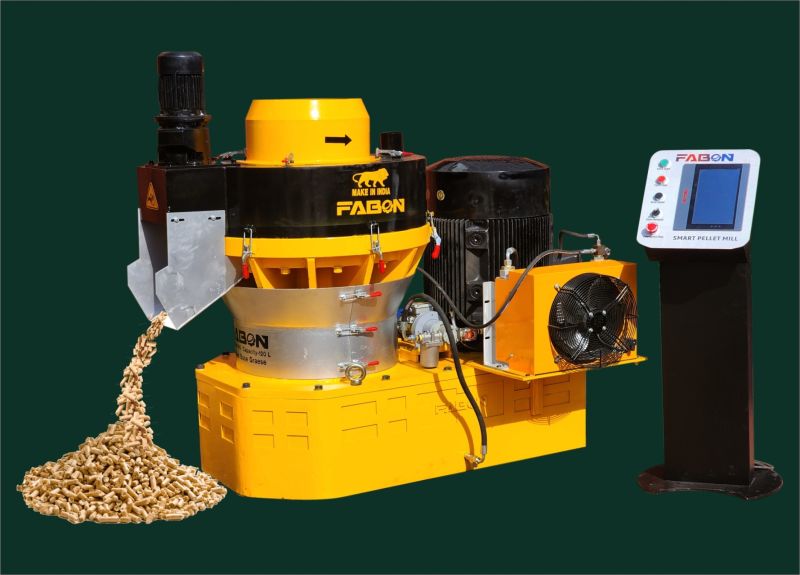
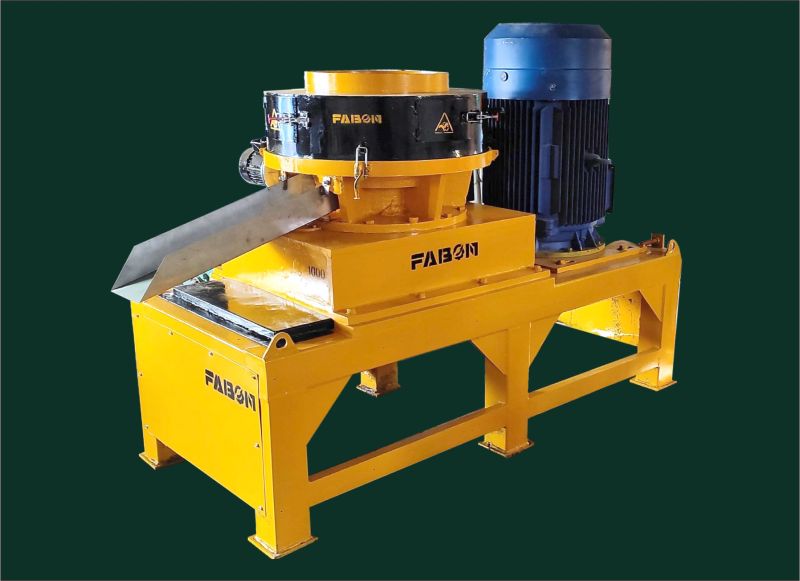
What: Machines and complete plants to convert agro‑waste (sawdust, husk, bagasse, shells, wood chips) into high‑density pellets used as fuel or feed. Fabon+1
Why: As industries move toward renewable fuels and circular economy, converting waste into saleable pellet fuel or animal feed becomes a strong business model. FABON offers flat‑die (for smaller scale) and ring‑die (industrial scale) solutions, and even torrefied systems (bio‑coal style) for higher value fuel. Fabon+1
Typical capacities: From a few hundred kg/hour to up to 2 TPH (tons per hour) and beyond. Fabon+1
Application scenarios:
- A rural entrepreneur uses sawdust from local hardwood to produce pellets and supplies to brick kilns or furnaces.
- A medium‑scale plant with ring‑die pellet mill supplies export fuel.
- Industries use pellet burners rather than fossil fuel boilers.
2.2 Animal Feed & Aquaculture Machinery
4
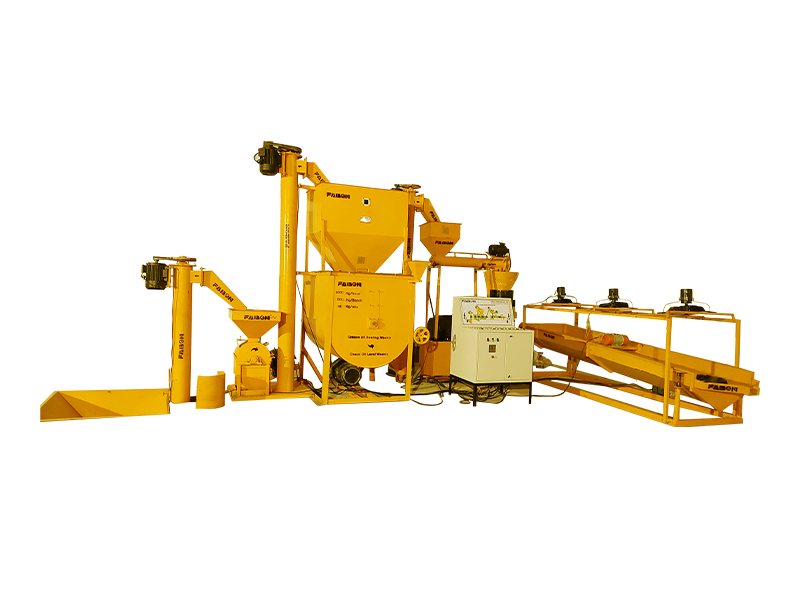
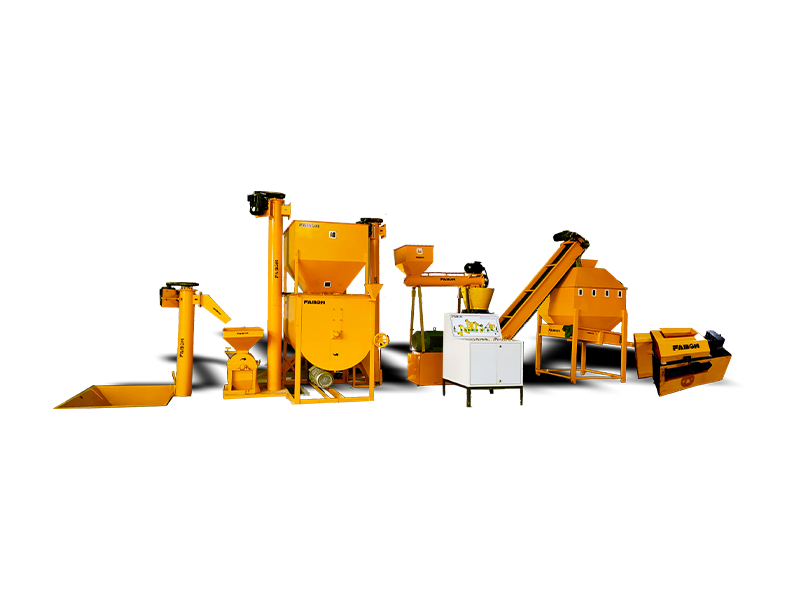
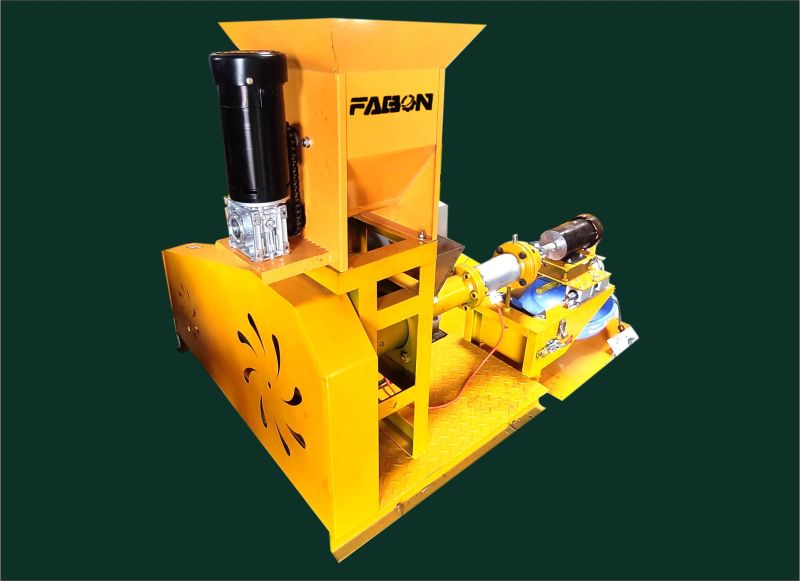
What: Complete feed plants for cattle, poultry, fish; pelletisers, mash plants, mixers, grinders. Examples: automatic cattle feed pellet plant 250 kg/h, 1000 kg/h series. TradeIndia+1
Why: With growing livestock/poultry/aquaculture industries in India and abroad, demand for high quality feed plants is rising. Businesses prefer turnkey supply from a reliable OEM like FABON.
Application scenarios:
- A poultry farm integrates a feed pellet plant to reduce dependence on external feed suppliers.
- A fish‑feed manufacturer uses floating fish feed machines to produce high‑value aquaculture feed.
2.3 Organic Manure & Fertilizer Machinery

4
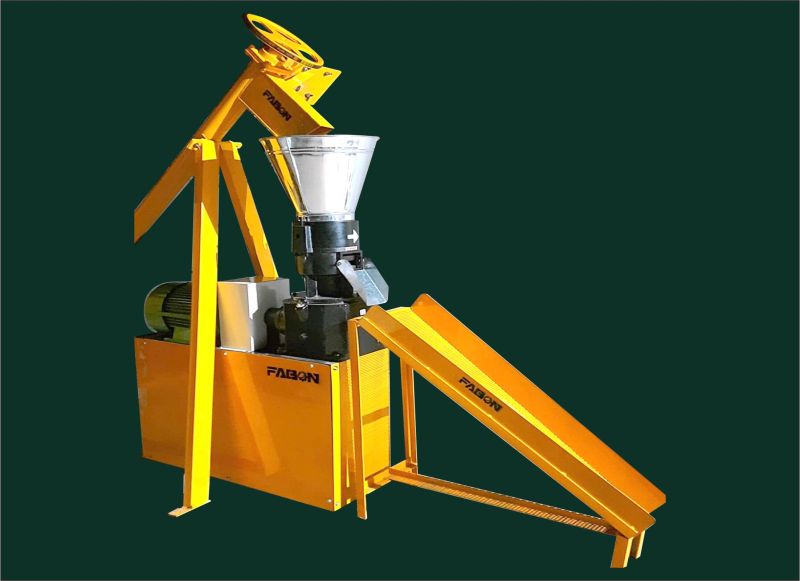
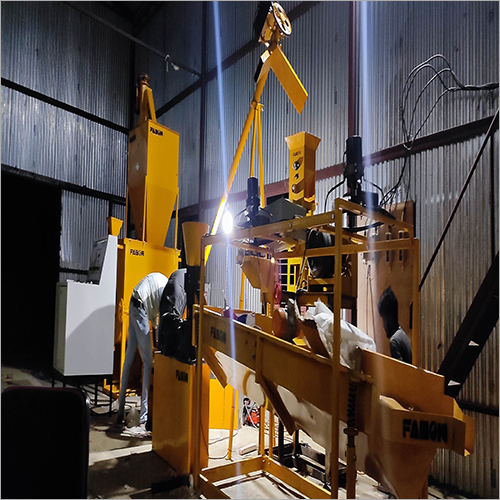
What: Machines that transform organic residues, compost, waste into pelletised fertilizers—ideal for large farms or industrial composting setups. Fabon Engineering Pvt. Ltd.
Why: With sustainable agriculture rising, pelletised organic fertiliser is attractive. FABON’s machines help farmers & agro‐processors add value, reduce waste, and produce marketable products.
2.4 Supporting / Auxiliary Machines
4
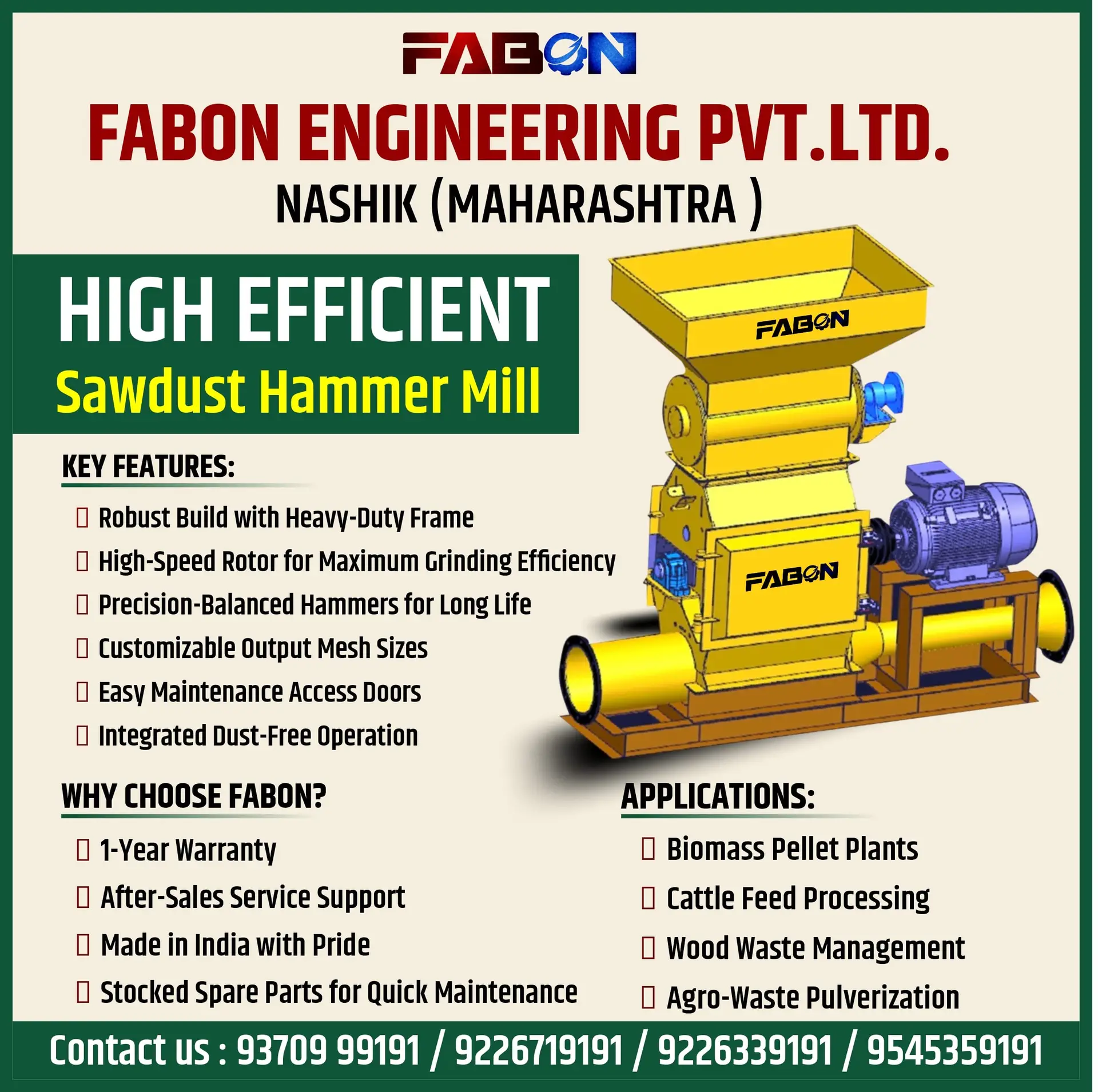
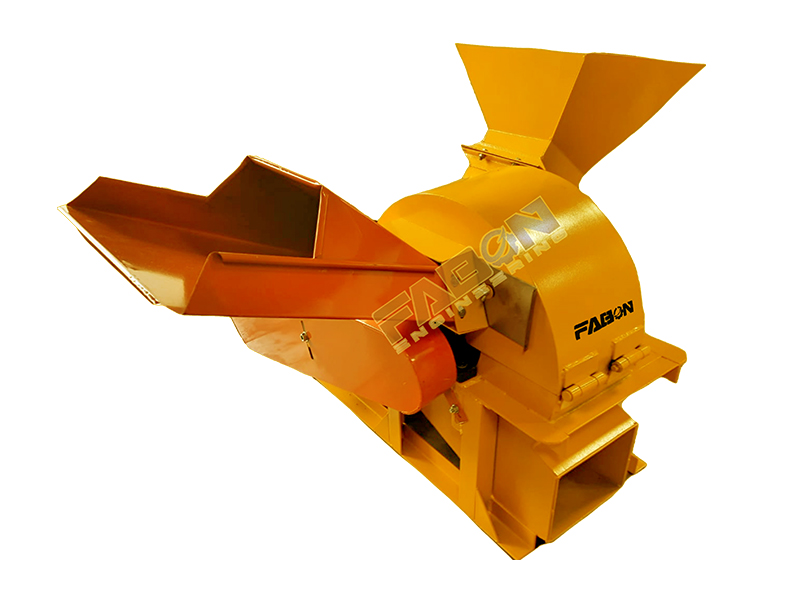
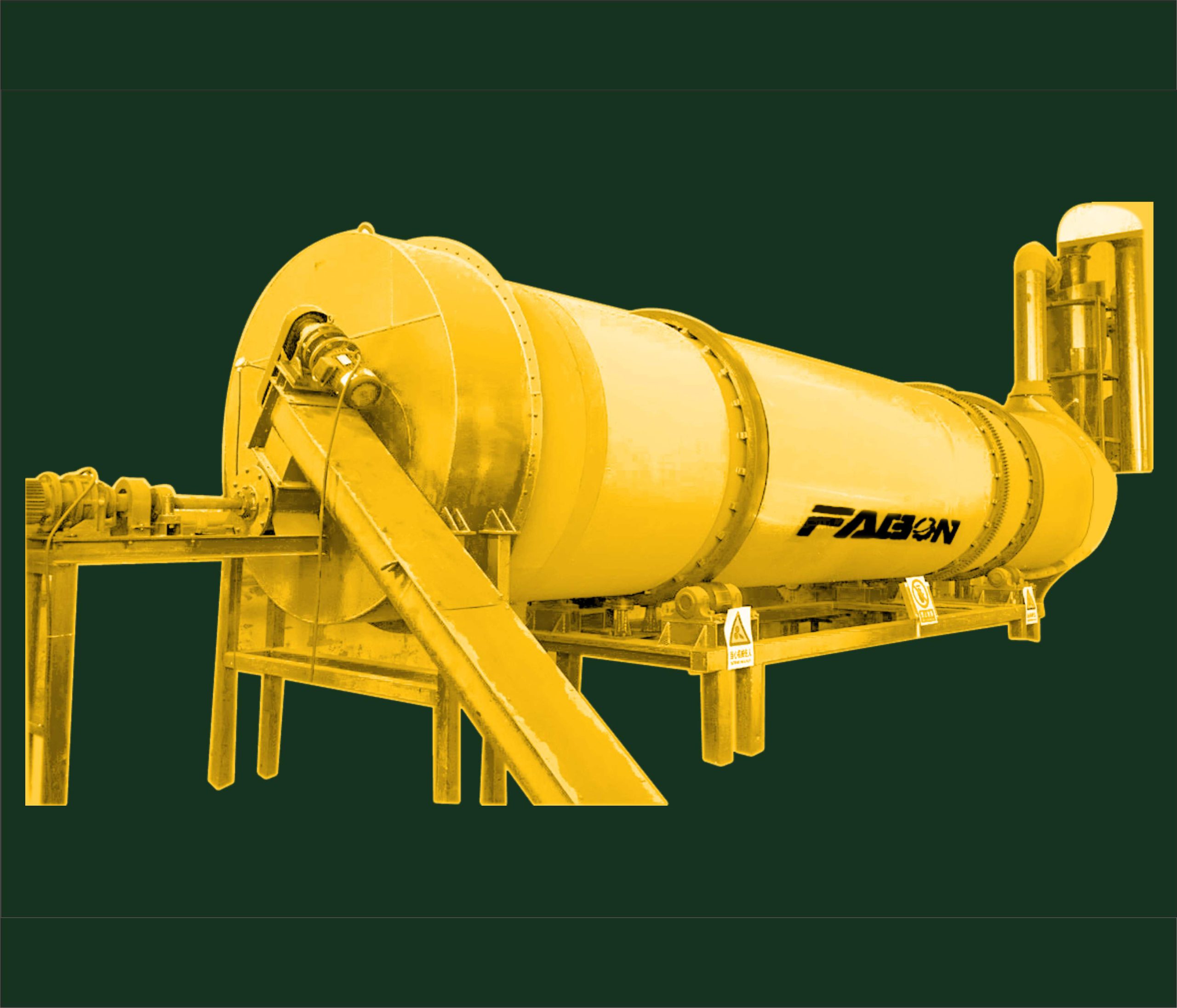
What: Shredders, sawdust dryers, separators, biomass pellet burners, press brake machines etc. These help in material preprocessing (shredding, drying) and fuel utilisation (burners), and also in fabrication (press brake). Examples include charcoal pellet machines. Fabon Engineering Pvt. Ltd.+1
Why: For an integrated plant, pre‑ and post‑processing machines are critical. For example, drying sawdust before pelletising increases efficiency. Biomass pellet burners enable the plant to use its own fuel or supply heating.
2.5 Turnkey Plants & Custom Solutions
FABON doesn’t just sell machines—they deliver entire lines/plant solutions: feed mills, pellet plants, drying units, conveyors, control systems. They customise the layout, capacity and automation level to your raw material, output target and budget. Fabon+1
3. Technological Differentiators & Innovation
What sets FABON apart from many other machine suppliers? Here are key differentiators:
3.1 Smart Automation & Control
FABON emphasises smart automation in its machines — real‑time monitoring, minimal manual intervention, operator dashboards — especially in pellet plants and feed plants. Fabon+1
This means better throughput, less operator error, better consistency and less labour cost.
3.2 Feedstock Flexibility & Modular Design
Their machines are engineered for Indian agro‑waste types: rice husk, bagasse, coconut shells, corn stalks, wood chips. They offer interchangeable dies, variable screen sizes, modular expansions. Fabon
This adaptability is crucial for profitability when raw material changes or quality varies.
3.3 Sustainable / Renewable Energy Focus
FABON integrates biomass pellet burners and torrefaction (bio‑coal) systems, enabling clients to leverage agro‑waste as fuel and reduce reliance on fossil fuels. This not only cuts cost but also supports carbon‑emission reduction. Fabon
3.4 In‑house Fabrication & Quality Control
They maintain in‑house workshops with CNC bending/press brake machines, precision work, strict QA protocols. This gives control over timeline, component quality and customization. Fabon Engineering Pvt. Ltd.+1
3.5 Export‑Grade Capability
The fact that they export means their machines must meet international compliance, logistics, spares, documentation. This gives domestic customers assurance of quality, durability and support. Fabon Engineering Pvt. Ltd.+1
4. Customer Benefits & Use‑Case Scenarios
4.1 Cost‑Efficiency & Better ROI
- By converting agro‑waste into pellets, or by producing feed in‑house, businesses cut input/raw material cost.
- Automated plants reduce labour & downtime.
- Quality machines mean fewer breakdowns, longer life, better uptime.
4.2 Diversified Revenue Streams
- A farm or agro‐processor can add a pellet business or feed‑manufacturing business.
- By installing biomass burners, they can reduce fuel cost and even sell excess heat/fuel.
- Waste becomes value. For example: sawdust that was a disposal cost now becomes pellet fuel.
4.3 Sustainability & Brand Image
- Using clean energy, recycling waste, producing organic fertilisers enhances brand image and may open access to subsidies, loans, carbon credits.
- A customer investing in FABON’s renewable/biomass lines sends a message of responsibility.
4.4 Turnkey Support & Reduced Risk
- Because FABON provides end‑to‑end solutions (design → manufacture → install → support), the risk of mismatched machines or compatibility issues is lower.
- Export‑experienced OEM means spares, after‑sales support, installation expertise is present.
4.5 Custom Fit for Indian Conditions
- Machines are designed for Indian waste types, climate, power conditions. Many imported units face issues with local conditions; FABON’s local presence is an advantage.
Real‑World Example Use Cases
Case 1: A rice‑milling cluster has abundant rice husk. They install a ring‑die pellet mill from FABON to produce husk pellets as fuel for brick kilns or power boilers.
Case 2: A poultry farm installs a 1000 kg/h feed pellet line from FABON. They mix local grains, produce poultry feed, and improve feed conversion ratio, saving cost and gaining independence.
Case 3: A saw‑mill installs a sawdust dryer + pellet plant, turning waste into fuel pellets and reducing disposal cost.
5. Quality, Support, After‑Sales & Global Reach
5.1 Quality Assurance & Standards
With ISO 9001:2015 certification, strict QA protocols and in‑house fabrication, FABON ensures each machine meets demanding standards. Fabon+1
Materials, welding, motors, controls—all are specified for durability.
5.2 Installation, Commissioning & Training
FABON provides site installation, commissioning support and operator training so that customers get full value and smooth startup. Fabon
5.3 After‑Sales, Spare Parts & Maintenance
They offer annual maintenance contracts (AMCs), spare‑parts supply, remote diagnostics and process optimization services. This means less downtime and better longevity. Fabon
5.4 Export & Logistics Experience
Exporting to multiple countries means FABON has logistics, customs, export‑compliance experience. Domestic customers benefit from this maturity. Fabon
5.5 Global Recognition & Exhibitions
They exhibit at major industrial fairs (e.g., Inter FoodTech 2025) and thereby stay current with trends and showcase credibility. Globixo
6. Sustainability, Green Manufacturing & Future‑Ready
6.1 Role in Circular Economy
FABON’s machines enable waste biomass to be converted into high‑value pellets (fuel or feed), reducing waste, lowering disposal cost, and generating new revenue streams.
6.2 Renewable Energy Solutions
Their biomass pellet burners and torrefaction lines allow clients to switch from fossil fuels to renewable biomass, thereby reducing emissions and aligning with global sustainability goals. Fabon
6.3 Contribution to Climate Goals
As nations push toward bio‑energy mandates and carbon‑neutral manufacturing, investing in machines from a partner like FABON positions you ahead. You may also qualify for incentives, carbon credits, government schemes.
6.4 Future Trends & FABON’s Vision
With the vision to drive green energy, FABON is poised to support next‑generation technologies: smart plants, IoT monitoring, bio‑coal/torrefied pellets, export‑oriented fuel lines. This means that your investment now is future‑proof.
7. Why Investing in FABON Makes Business Sense
Let’s summarise the key reasons in a compact format:
- Reliability: 18+ years of manufacturing and export pedigree; ISO certified.
- Versatility: Product range covers biomass, feed, fertilizer, supporting machines.
- Customisation & Scalability: From small plants to large industrial installations.
- Cost‑savings: Efficient utilisation of waste, reduced fuel/operational cost, improved productivity.
- Support & Turnkey service: Design, manufacturing, installation, training, spares.
- Sustainability: Aligned with green manufacturing, waste reduction, renewable energy trends.
- Global Positioning: Export experience means you are partnering with an internationally capable vendor.
- Local Fit: Machines designed for Indian conditions and raw materials.
- Growth Orientation: As industries grow (feed, aquaculture, bio‑fuel), you’re positioned to scale.
- Competitive Advantage: Early adoption of sustainable & efficient technology gives you edge.
8. How to Choose the Right SYSTEM from FABON
Investing in a machine or plant is a major decision. Here are practical tips to select the right system from FABON.
8.1 Define Your Raw Material & Output
- What raw material do you have (sawdust, bagasse, rice‑husk, poultry excreta, etc.)?
- What is your target output (kg/hour or ton/day)?
- Do you want fuel pellets, feed pellets or fertilizer pellets?
8.2 Site Conditions & Infrastructure
- Available space: footprint of plant, shed, power supply.
- Power availability: voltage, phase, reliability.
- Raw material moisture, size – equipment such as dryers/shredders may be required.
8.3 Choose Capacity & Technology
- For smaller operations: flat‑die pellet plants may suffice.
- For large/industrial: ring‑die pellet plants, automated feed lines.
- Consider optional modules: e.g., biomass burner, torrefaction, automated conveyors.
8.4 Automation & Control Level
- Do you need basic semi‑automatic or full automatic?
- Smart dashboards, remote monitoring, operator interface matter for large plants.
8.5 ROI & Cost Analysis
- Cost of machine/plant vs expected revenue (from pellets or feed).
- Operating cost: power, maintenance, raw material, labour.
- Availability of raw material and market for output (feed/ pellets/fertilizer).
8.6 After‑Sales & Spares
- Confirm FABON’s support network, spare part availability, training.
- Evaluate warranty, AMC options.
8.7 Visit & Demonstration
- If possible, visit a running installation of FABON in operation.
- Ask for client referrals/testimonials.
8.8 Customisation & Future Growth
- Ensure plant layout allows expansion.
- Choose a vendor (FABON) that can upgrade or add modules over time.
9. Tips for Installation, Operation & Maximising ROI
To get maximum benefit from your investment with FABON, here are practical tips:
9.1 Pre‑Installation Planning
- Have concrete foundation, proper electrical and civil work done.
- Ensure raw material procurement secured – for example sawdust of consistent size and moisture.
- Clear path for material flow, conveyors, storage.
9.2 Commissioning & Training
- Use FABON’s training sessions for operators.
- Monitor the initial run for output, pellet quality, feed conversion ratio if applicable.
- Adjust parameters: die clearance, feed rate, moisture content.
9.3 Quality Control of Input & Output
- For pellet plants: ensure raw material moisture is optimal (typically 10‑12% for sawdust) for good pellet quality.
- For feed plants: balance feed mix formulations, monitor pellet durability, nutritional value.
- For fertilizer: granulation uniformity, drying, packaging.
9.4 Maintenance & Spare Parts
- Regular cleaning, lubrication, timely replacement of wear parts (dies, rollers, belts).
- Maintain a log of downtime, maintenance cost.
- Keep key spares in inventory for faster turnaround.
9.5 Monitoring Metrics & KPI
- Throughput (kg/h), pellet quality (% fines), energy consumption kWh/ton.
- Feed‑conversion ratio (for feed plants).
- Sales and market engagement of produced product (pellets/feed/fertiliser).
- Cost per tonne produced vs sale price to track margins.
9.6 Marketing & Sales of Output
- For fuel pellets: identify potential buyers (brick kilns, boilers, export market).
- For feed: leverage local poultry/fish farms, cooperatives.
- For fertilizers: local farmers, co‑ops or vendors.
- Use certifications/sustainable credentials to market premium value.
9.7 Scalability
- Plan for future expansion: modular plant design by FABON allows adding extra lines or capacity.
- Monitor market demands so you can scale up without major re‑investment.
10. Conclusion & Call to Action
In summary, if you are seeking a trusted, high‑quality engineering partner for biomass & fuel pellet plants, feed manufacturing, fertilizer pellet lines or auxiliary machines, FABON Engineering Pvt. Ltd. stands out as a top choice. With 18+ years of experience, ISO certification, global export pedigree, strong product range and a deep commitment to customer satisfaction and sustainability—they deliver value far beyond just machines.
When you partner with FABON:
- You get machines designed for Indian raw‑material conditions and global markets.
- You benefit from turnkey support from design through commissioning.
- You gain access to sustainable, efficient technologies that enhance ROI and reduce operating cost.
- You position your business in the green zone, capable of tapping into the growth of feed, biomass fuel, agro‑processing and circular economy.
Next Steps:
- Visit the FABON website at fabon.in and explore the product catalogue.
- Contact their team with your raw‑material, capacity requirement and budget for a customised quote.
- Request a plant visit or client reference to validate performance.
- Map out your ROI and business plan, then move to commissioning.