

“BOOST YOUR FABRICATION EFFICIENCY WITH FABON’S CNC HYDRAULIC PRESS BRAKE MACHINES”
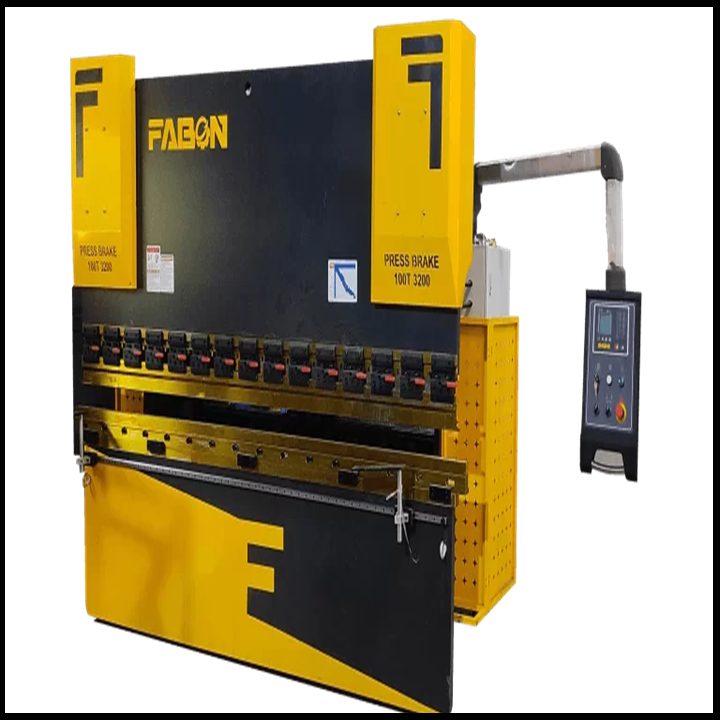
Introduction: Why Fabrication Efficiency Matters
In today’s competitive manufacturing and metalworking world, time is money. Precision, repeatability, waste reduction, and throughput are not optional — they are essential for profitability, reputation, and growth. For fabrication shops, especially those working in sheet metal, enclosures, brackets, chassis, HVAC ducting, and architectural metalwork, the bending process is often a bottleneck. A sub‑optimal bending operation can lead to rework, scrap, delays, and dissatisfied customers.
This is where modern press brake technology — particularly CNC hydraulic press brakes — brings transformative gains. And among the players in this domain is Fabon Engineering Pvt. Ltd., based in Nashik, India, offering locally manufactured CNC hydraulic press brake machines that combine power, accuracy, serviceability, and cost effectiveness.
precision bending, etc. fabon.in
3.2 Strengths & Differentiators of Fabon
Several features give Fabon an edge in the Indian/regional market:
- Local manufacturing & support
Being based in Nashik, Maharashtra, Fabon can provide faster service, spare parts supply, and local maintenance support — a major advantage over imported machines. fabon.in+1 - Cost effectiveness
Lower import duties, shipping, and logistics make Fabon competitive in cost. Also, their machines are designed for Indian shop conditions (voltage fluctuations, climate). - Customization
Local builders are often flexible about special sizing, tooling, control options, and retrofits. - Export credibility
Fabon already exports to South Africa, Bangladesh, Singapore, Malaysia, Nigeria, etc. fabon.in - Warranty & service
They offer at least a 1-year warranty, and service & training are part of their offerings. Fabon Engineering Pvt. Ltd.+2fabon.in+2 - Integrated fabrication business
Fabon’s broader business (agricultural machinery, industrial machines) means they understand shop dynamics, durability, and field support. Fabon Engineering Pvt. Ltd.
3.3 Possible Areas for Improvement
To compete with global top-tier models, Fabon (or a buyer) should check on:
- Advanced multi-axis control (4‑axis, 6‑axis) for complex bends
- Offline programming support
- Higher memory and more advanced CNC controller
- More automation (automatic tool changers)
- Enhanced feedback systems (laser angle measurement)
- More detailed documentation, training, diagnostics
But for many shops in India and nearby regions, Fabon offers a compelling package combining capability and pragmatic service.
4. Quantifying the Gains: ROI, Metrics & Case Scenarios
To justify purchase and adoption, we need to look at quantitative gains. Here are metrics, scenarios, and sample calculations.
4.1 Key Metrics to Track
When you deploy a Fabon CNC hydraulic press brake, monitor:
- Setup time per job (pre-programming, die mounting)
- Cycle time per bend
- Parts per hour / throughput
- Reject / scrap rate
- Labor hours per part
- Material yield / waste
- Equipment uptime / downtime
- Payback period / ROI
4.2 Sample Scenario: Small Job Shop vs Broader Order Volume
Let’s imagine a medium‑size sheet metal shop fabricates 500 parts per month needing 3 bends each, each part costing ₹500 in sheet value, and the machine works 22 days/month, 8 hours/day.
Without CNC press brake (manual / semi-automatic):
- Setup and adjustment: ~20 min per job
- Cycle time per bend: 20 seconds
- Scrap / rework rate: 5%
- Labor cost: ₹300/hour
- Material cost: as is
With Fabon CNC hydraulic press brake:
- Setup & programming: 5 min (offline prep, minimal trial)
- Cycle per bend: 12 seconds
- Scrap / rework: 1%
- Labor: one operator handles multiple machines
- Material better used due to fewer errors
Let’s compute:
- Parts to bend: 500 × 3 = 1,500 bends
- Setup time saved: (20–5) min × 500 jobs = 15 min × 500 = 7,500 min = 125 hours saved
- Cycle time saved: (20 – 12) = 8 sec × 1,500 = 12,000 seconds = 200 min = ~3.33 h
- Labor saving: 125 h + 3.33 h = ~128.3 h × ₹300 = ₹38,490 saved
- Reduced scrap: saving of (5% – 1%) × material cost. Suppose each part costs ₹500, scrap reduction = 4% × 500 × 500 = ₹10,000
- Total saving per month: ~₹48,490
- Annual saving: ~₹5,81,880
If the machine costs ₹15 lakh, simple payback would be ~ 2.6 years — and that’s conservative. In reality, with additional orders, overtime, premium jobs, the payback is faster.
Additionally, as throughput increases (multiple shifts, more jobs), the ROI accelerates.
4.3 Case Example (Hypothetical / Qualitative)
A fabrication shop in Maharashtra invested in Fabon’s 100T3200 model. Before, their bending cell had two older mechanical brakes and four workers, struggling to meet deadlines for electrical panels and enclosures. After commissioning:
- They reduced job setup times by 60%.
- Throughput increased by 30%.
- Reject rate dropped from ~4% to <1%.
- With faster delivery, they got more orders and higher margin.
In just 18 months, the machine had paid for itself, and they expanded with a second unit.
(While this is illustrative, real user testimonials from Fabon customers can be included for stronger credibility.)
5. Best Practices to Maximize Efficiency with Fabon CNC Press Brake
Owning a machine is one thing; using it smartly is another. Here are best practices to squeeze every bit of efficiency out of your Fabon CNC press brake.
5.1 Pre-Planning and Offline Programming
- Use offline software to prepare bend sequences, simulate collisions, optimize back gauge paths.
- Validate and optimize sequences before running on the machine.
- Save frequently used programs for reuse.
- Simulate long runs to detect clashes or mis-sequences.
5.2 Tooling Strategy & Change Optimization
- Group similar jobs to reduce die change frequency.
- Use quick-change tool holding where possible.
- Keep backup tooling sets so you don’t have to stop production waiting for tools.
- Maintain tooling (sharpening, alignment) to avoid poor bends or extended cycle times.
5.3 Smart Material Handling & Flow
- Use roller tables or material supports to feed parts into the press brake seamlessly.
- Pre-mark parts or use jigs to avoid repositioning delays.
- Minimize operator walking by laying out parts logically.
- Use feeding aids or even robotic feeders for high-volume jobs.
5.4 Lean & 5S Principles Around the Machine
- Maintain a clean, organized work cell.
- Place all frequently used tooling, gauges, safety equipment close by.
- Identify and remove any waste in the process (motion, waiting, transport).
- Standardize processes so every operator follows the best method.
5.5 Proactive Maintenance & Monitoring
- Schedule regular inspections of hydraulic fluid, filters, valve maintenance, cylinder sealing.
- Monitor machine data (pressure, temperatures, cycle times) for anomalies.
- Use predictive or condition-based maintenance rather than reacting to breakdowns.
- Document maintenance events and machine history.
5.6 Training & Skill Development
- Ensure operators are thoroughly trained on the CNC interface, error diagnostics, and safety.
- Simulate error conditions or collision handling.
- Encourage operators to suggest improvements and streamline programming.
5.7 Real-Time Feedback & Error Correction
- Use sensors and angle measurement feedback to adjust for springback or material variation.
- Fine-tune bend angles during the first few parts rather than letting errors propagate.
- Use crowning / compensation functions to correct for uneven bending across a long span.
Applying these practices can deliver additional 10–20% gains over base machine performance.
6. Common Challenges & Pitfalls — and How Fabon Handles or You Can Mitigate
Even the best machines have challenges. Knowing them in advance helps avoid setbacks.
6.1 Mis‑Specifying the Machine (Underpowered / Undersized)
Buying a machine with too little tonnage or too short a span leads to inability to handle tougher jobs or bending parts near the limit. Always include margin.
Mitigation: Request demo with your actual parts; add 20–30% margin; consult with Fabon engineers on future growth.
6.2 Poor Frame Rigidity / Deflection
Long parts may bend nonuniformly if deflection is high. Without crowning or compensation, angle errors arise.
Mitigation: Check frame design, ask for FEM stress analysis, ensure crowning, calibrate periodically.
6.3 Inadequate Back Gauge / Axis Control
If the back gauge is slow, has low resolution, or lacks axes, repositioning becomes a bottleneck.
Mitigation: Demand modern multi-axis gauge, high-speed motors, good resolution (e.g. ±0.01 mm).
6.4 Operator Errors & Safety Risks
Untrained or careless operators may cause collisions, damage tooling, or injure themselves.
Mitigation: Enforce safety protocols, guards, training, lock-out procedures. Ensure the machine has protective sensors and collision detection.
6.5 Hydraulic Issues / Maintenance Failures
Leaks, oil degradation, valve wear, misalignment can degrade performance over time.
Mitigation: Regular maintenance, use good quality oil, monitor filtering, inspect seals, replace parts proactively.
6.6 Electrical / Control Failures
CNC controller glitches, voltage fluctuations, or component failures can stall production.
Mitigation: Use surge protectors, UPS, stable power supply; choose controllers that can tolerate voltage variations; maintain backups and support.
6.7 Tooling Wear & Setup Errors
Worn tooling or incorrect die choice can degrade bend quality and slow the process.
Mitigation: Inspect tooling, maintain, sharpen, stock spares, verify die choice and dimensions before each job.
By planning ahead and working closely with the machine vendor (Fabon) on support, many of these pitfalls can be minimized.
7. How to Select, Install, and Maintain Your Fabon CNC Press Brake
This section acts as a buyer’s guide / user manual, helping you make the decision, prepare your shop, and maintain the machine.
7.1 Pre‑Purchase Considerations & Checklist
| Factor | Questions to Ask / Verify |
|---|---|
| Job scope | What is the maximum sheet size, thickness, and bend location you’ll need? |
| Tonnage & span margin | Ask for a 20–30% safety buffer beyond your worst-case load |
| Axis / gauge requirements | Do you need 4-axis / 6-axis capability for your most complex parts? |
| Program capacity & software | How many programs can the CNC store? Does it support offline programming? |
| Frame / rigidity | Request FEM data, stress-relieved frame, crowning provision |
| Tooling & changeover | What punch/die sets are included? Is quick change available? |
| Hydraulic system quality | Brand of pumps, valves, seals; filtration & cooling |
| Safety features | Guards, laser sensors, collision detection, emergency stops |
| Power & utilities | Voltage compatibility, power draw, foundation, floor strength |
| Service & support | Spares availability, field support, warranty, documentation |
| Demo & references | Ask to see the machine working with parts similar to yours |
7.2 Site Preparation & Installation
- Prepare a stable, level foundation—concrete pad or steel structure with minimal vibration.
- Ensure power supply (voltage, phase, protective circuits, surge suppression).
- Provide compressed air, cooling, hydraulic oil supply / return lines.
- Position the machine to ensure good material flow (infeed, outfeed, support stands).
- Provide safety barriers, guard fences, lighting, flooring mats, etc.
- Bring in lifting and alignment equipment, and have Fabon technicians supervise alignment and commissioning.
7.3 Commissioning & Operator Training
- After installation, run test programs with sample parts; calibrate and fine-tune.
- Train operators on CNC programming, diagnostics, safety, maintenance.
- Document standard operating procedures (SOPs), emergency steps, and tool change protocols.
7.4 Maintenance & Service Schedule
- Daily: Check hydraulic oil level, visual inspection, clean work area.
- Weekly: Lubricate guideways, check tool alignment, clean filters.
- Monthly: Check hydraulic pressure, filter condition, valve performance, numeral alignment.
- Quarterly / biannual: Replace oil (if needed), inspect hoses, seals, calibrate gauge axes, inspect structural fasteners.
- Annual: Major inspection of frames, cylinders, re‑stress relief or recalibration if needed.
Also record logs, note any anomalies, and proactively address minor faults before they become major.
7.5 Spare Parts & Consumables Strategy
- Keep critical spares: seals, valves, filters, hydraulic hoses, sensors, fuses.
- Keep extra tooling sets (punches, dies).
- Maintain a supply of high-quality hydraulic oil.
- Maintain calibration jigs and measurement standards for periodic checks.
With good spares, you minimize downtime when faults occur.
8. Why Fabon Is a Smart Choice (Especially for Indian / Regional Fabricators)
Having explored capabilities, gains, and execution, here is a summary of why Fabon is a strong contender for many fabrication shops, especially in India and nearby markets.
8.1 Local Support & Faster Service
Foreign machines often face long lead times for parts and service support. Fabon’s presence in Nashik means quicker access to engineers, spare parts, and maintenance visits. This reliability reduces downtime risk.
8.2 Cost Competitiveness
Because manufacturing, logistics, and overheads are domestic, Fabon can offer better price-performance ratio. No heavy import duties or freight markups.
8.3 Customization Agility
Indian shops often have irregular needs: awkward layouts, special parts, unusual tooling. A local vendor like Fabon is more likely to customize benders, modify spans, integrate with existing workflows, or provide hybrid solutions.
8.4 Understanding Local Shop Conditions
Indian / regional workshops deal with challenges like voltage fluctuations, dusty environments, variable climate, and maintenance constraints. A local company that understands these can design more robust machines suited to these conditions.
8.5 Export & Credibility
Fabon already exports machines to countries like Bangladesh, Nigeria, Malaysia, South Africa, which indicates their machines can meet competitive international standards. fabon.in
8.6 Integrated Product Ecosystem
Fabon also manufactures other machinery (agricultural, biomass, wood processing) so their engineering team understands heavy machinery, durability, and field service. Fabon Engineering Pvt. Ltd.
8.7 Strong Warranty & Service Promise
With at least one year warranty and a local service network, customers have confidence in after-sales support. Fabon Engineering Pvt. Ltd.+2fabon.in+2
9. Future Trends & How Fabon Can Evolve
To stay ahead, Fabon and its users should watch and possibly invest in future trends in press brake / fabrication technology. Some key directions:
9.1 Hybrid & Full‑Electric Press Brakes
Electric or hybrid press brakes (servo-electric or electro-hydraulic) offer lower energy consumption, faster response, quieter operation, and precise control. Many manufacturers globally are pushing into this. A hybrid approach allows Fabon to offer both hydraulic robustness and electric efficiency.
9.2 More Automation & Robotic Integration
- Robotic part loading/unloading
- Automatic tool changers
- Sheet followers or conveyors
- Closed-loop feedback systems
- Integration into smart factory / Industry 4.0 networks
These features reduce labor and boost continuous operation.
9.3 AI / Smart Diagnostics & Predictive Maintenance
Using sensors and data analytics, machines can predict failures (hydraulic leak, wear, seal failure) before breakdowns occur. Smart dashboards can alert operators to deviations in cycle time, temperature, or pressure.
9.4 Remote Monitoring & IoT
Machines connected to a cloud platform allow remote monitoring, diagnostics, usage analytics, and even remote parameter changes by service engineers. This reduces service visits and speeds up debugging.
9.5 Advanced Bending Algorithms & Material Compensation
Software that adapts for material variability, springback correction, temperature compensation, and iterative bend adjustment can further reduce trial parts and waste.
9.6 Modular / Scalable Machine Platforms
Designing base frames that can be extended or upgraded (e.g. adding extra span modules or axes) gives shops flexibility to grow without replacing the entire machine.
Fabon, with its engineering base, is well positioned to adopt these trends gradually. A roadmap combining hydraulic CNC now, and later hybrid or automated variants, is sensible.
10. Conclusion & Call to Action
A CNC hydraulic press brake is not just a machine—it’s a productivity multiplier, precision tool, and long-term investment in your shop’s competitiveness. When properly selected, commissioned, and used, it can:
- Slash setup times
- Boost throughput
- Reduce scrap and rework
- Raise consistency and quality
- Accelerate your project delivery
- Enable growth with more orders
Fabon Engineering, with its Nashik base, competitive pricing, local support, export experience, and commitment to industrial durability, offers a compelling choice for Indian and regional fabrication shops.
If you are considering upgrading or expanding your bending capability, here’s what you can do next:
- Request a demo or site visit — see a Fabon CNC hydraulic press brake in action with your parts.
- Get a customized proposal — ask Fabon to configure tonnage, span, axes, and features optimized for your workload.
- Plan your ROI — based on your job mix, run a cost-saving model (like the sample scenario above) to justify the investment.
- Prepare your shop — arrange foundation, power, material flow, safety layout.
- Train and standardize — adopt best practices to ensure you realize full value.
If you like, I can tailor this blog further — insert images, optimize for your specific models, create meta title/description, suggest internal linking strategies, or even split into multiple SEO blog posts (e.g. “How to choose a press brake,” “Fabon vs imported benders”). Do you want me to prepare that next?