

Converting Agricultural Waste into Biomass Energy
Introduction
Agriculture is one of the largest industries in the world, producing enormous quantities of food, fiber, and raw materials. However, alongside agricultural production comes a significant amount of waste. Every year, millions of tons of crop residues such as rice husk, wheat straw, corn cob, bagasse, cotton stalk, and groundnut shells are generated across farming regions.
Traditionally, much of this agricultural waste has been burned in open fields, dumped in landfills, or left to decompose naturally. These practices not only waste valuable resources but also cause serious environmental problems such as air pollution, greenhouse gas emissions, and soil degradation.
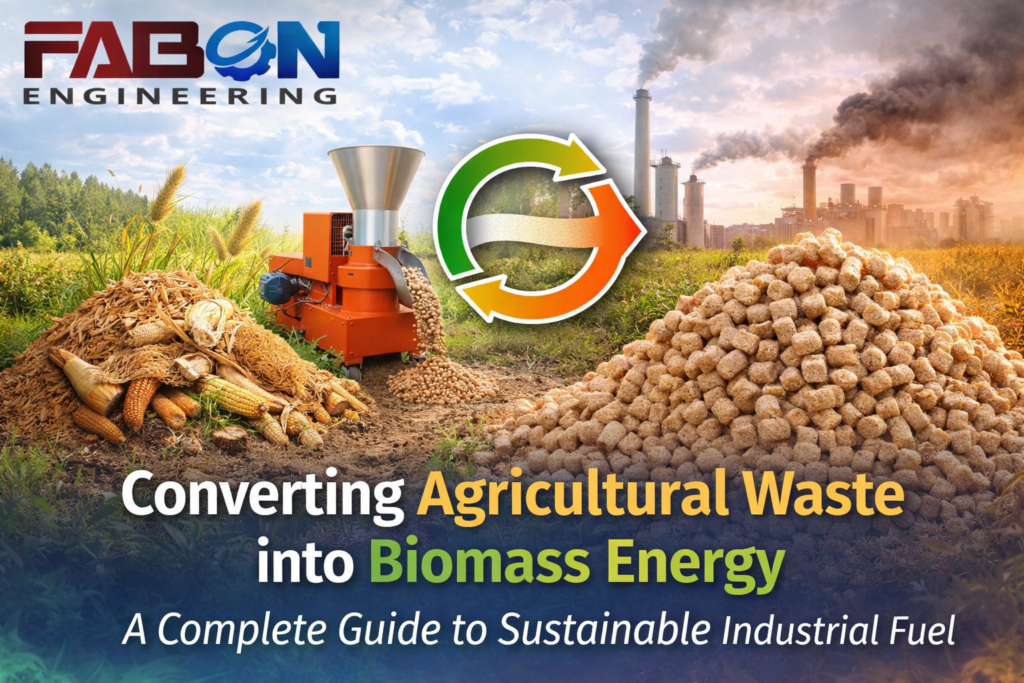
In recent years, the global energy sector has started recognizing agricultural waste as a valuable resource that can be converted into renewable energy. By transforming agricultural residues into biomass fuels such as pellets, briquettes, biogas, and biofuels, industries can generate sustainable energy while simultaneously solving the problem of agricultural waste management.
The conversion of agricultural waste into biomass energy has become an important component of the global renewable energy transition. Governments, industries, and research institutions are investing heavily in technologies that can efficiently convert biomass residues into usable energy.
This article provides a comprehensive guide to converting agricultural waste into biomass energy, covering its sources, technologies, benefits, challenges, industrial applications, and future potential.
Understanding Agricultural Waste
Agricultural waste refers to organic residues generated during crop harvesting, processing, and agricultural activities. These residues contain cellulose, hemicellulose, lignin, and other organic compounds that store solar energy captured through photosynthesis.
Because of their organic composition, agricultural wastes can be used as fuel to produce heat, electricity, or biofuels.
Major Types of Agricultural Waste
Crop Residues
Crop residues are the remains of plants after harvesting.
Common examples include:
- Rice straw
- Wheat straw
- Corn stover
- Cotton stalk
- Mustard husk
- Soybean husk
These residues are abundant in agricultural regions and represent one of the largest biomass resources in the world.
Agro-Processing Waste
Agricultural processing industries also produce biomass residues.
Examples include:
- Rice husk from rice mills
- Bagasse from sugar mills
- Groundnut shells from oil mills
- Coffee husk from coffee processing
These residues are already concentrated at industrial locations, making them easier to convert into energy.
Forestry and Wood Waste
Although not strictly agricultural, forestry residues and wood waste are often combined with agricultural biomass in energy production.
Examples include:
- Sawdust
- Wood chips
- Bark
- Timber waste
These materials are widely used in biomass pellet production.
Why Converting Agricultural Waste into Energy is Important
Agricultural waste management has become a major challenge in many countries. Large quantities of crop residues are often burned in open fields to clear land for the next planting season.
This practice causes several problems:
Air Pollution
Burning agricultural waste releases particulate matter, carbon monoxide, and other pollutants that degrade air quality.
Greenhouse Gas Emissions
Crop burning contributes to carbon dioxide and methane emissions, which accelerate climate change.
Loss of Valuable Resources
Agricultural residues contain stored energy that could be used for power generation or industrial heating.
Soil Degradation
Burning residues destroys soil nutrients and beneficial microorganisms.
Converting agricultural waste into biomass energy addresses these problems by turning waste into a valuable energy resource.
Biomass Energy from Agricultural Waste
Biomass energy refers to energy produced from organic materials such as plant residues, animal waste, and forestry products.
Agricultural waste is one of the most important biomass sources because it is:
- Renewable
- Widely available
- Low cost
- Carbon-neutral
The energy stored in biomass originates from sunlight captured by plants during photosynthesis. When biomass is burned or converted into fuel, this stored energy is released.
Agricultural waste can be converted into several types of biomass energy.
Methods of Converting Agricultural Waste into Energy
There are multiple technologies used to convert agricultural residues into usable energy.
Direct Combustion
Direct combustion is the simplest and most widely used method of converting biomass into energy.
In this process:
- Agricultural waste is dried and prepared as fuel.
- The biomass is burned in boilers or furnaces.
- Heat generated from combustion produces steam.
- Steam drives turbines to generate electricity or provides industrial heat.
Direct combustion is commonly used in industries such as sugar mills, textile factories, and food processing plants.
Biomass Pellet Production
Biomass pelletization is one of the most advanced methods of converting agricultural waste into high-quality fuel.
The process involves several steps:
Raw Material Collection
Agricultural residues such as sawdust, rice husk, and straw are collected.
Grinding
The biomass is ground into smaller particles using hammer mills.
Drying
Moisture content is reduced using rotary dryers or flash dryers.
Pelletization
The dried material is compressed into cylindrical pellets using pellet machines.
Cooling and Packaging
Pellets are cooled and packed for transportation.
Biomass pellets have several advantages:
- High energy density
- Uniform size
- Low moisture content
- Efficient combustion
Pellets are widely used in industrial boilers and thermal power plants.
Biomass Briquetting
Briquetting is another popular technology for converting agricultural waste into solid fuel.
In this process:
- Biomass residues are compressed under high pressure.
- The material forms dense blocks known as briquettes.
Briquettes are used as an alternative to coal in many industries.
Common briquette raw materials include:
- Rice husk
- Sawdust
- Bagasse
- Groundnut shells
Biomass Gasification
Gasification is a thermochemical process that converts biomass into combustible gas known as syngas.
The process occurs at high temperatures in a limited oxygen environment.
Syngas contains:
- Carbon monoxide
- Hydrogen
- Methane
This gas can be used to generate electricity or power engines.
Gasification systems are widely used in rural electrification projects.
Anaerobic Digestion
Anaerobic digestion converts organic waste into biogas using microorganisms in oxygen-free conditions.
Agricultural residues and animal waste are placed in a digester where bacteria break down organic matter.
The process produces:
- Biogas (methane and carbon dioxide)
- Digestate used as fertilizer
Biogas can be used for cooking, electricity generation, and heating.
Major Agricultural Biomass Resources
Several types of agricultural waste are commonly used for biomass energy.
Rice Husk
Rice husk is one of the most abundant biomass residues in rice-producing countries.
It has:
- Good calorific value
- Low moisture content
- High silica content
Rice husk is widely used for biomass power generation and pellet production.
Bagasse
Bagasse is the fibrous residue left after extracting juice from sugarcane.
Sugar mills use bagasse as fuel for boilers to generate steam and electricity.
Bagasse-based power plants are common in sugar-producing regions.
Wheat Straw
Wheat straw is a major agricultural residue in many countries.
It can be used for:
- Pellet production
- Briquetting
- Biofuel production
Corn Residues
Corn stover includes stalks, leaves, and cobs remaining after corn harvesting.
These residues are increasingly used for bioenergy production.
Cotton Stalk
Cotton stalk is widely available in cotton-growing regions and has good fuel properties.
Industrial Applications of Agricultural Biomass Energy
Biomass energy produced from agricultural waste is widely used in various industries.
Thermal Power Plants
Many power plants use biomass pellets or briquettes to replace coal partially.
This process is known as biomass co-firing.
Textile Industry
Textile factories require large quantities of steam for processing.
Biomass boilers provide a cost-effective fuel solution.
Food Processing
Food processing plants use biomass energy for drying, heating, and cooking.
Chemical Industry
Biomass boilers supply process heat for chemical manufacturing.
Cement Industry
Some cement plants use biomass as alternative fuel in kilns.
Environmental Benefits
Converting agricultural waste into biomass energy offers several environmental benefits.
Reduced Air Pollution
Using agricultural waste for energy prevents open field burning, which significantly reduces air pollution.
Lower Carbon Emissions
Biomass energy is considered carbon neutral because plants absorb carbon dioxide during growth.
Waste Management
Biomass energy converts agricultural residues into useful fuel instead of waste.
Soil Health
Proper residue management helps maintain soil fertility.
Economic Benefits
Biomass energy also provides important economic advantages.
Lower Fuel Costs
Biomass fuels are often cheaper than fossil fuels such as diesel or furnace oil.
Rural Employment
Biomass supply chains create jobs in:
- Raw material collection
- Transportation
- Pellet production
- Plant operation
Farmer Income
Farmers can earn additional income by selling crop residues.
Local Energy Production
Biomass energy reduces dependence on imported fossil fuels.
Challenges in Biomass Energy Development
Despite its advantages, converting agricultural waste into energy faces several challenges.
Collection and Transportation
Agricultural residues are often scattered across large areas, making collection difficult.
Seasonal Availability
Crop residues are available mainly during harvest seasons.
Moisture Content
High moisture levels can reduce combustion efficiency.
Storage Requirements
Biomass fuels require proper storage to prevent moisture absorption.
Technology Costs
Advanced biomass technologies require investment.
However, technological improvements and government support are helping overcome these challenges.
Government Policies and Support
Many governments are promoting biomass energy through policies such as:
- Renewable energy subsidies
- Biomass power incentives
- Carbon reduction programs
- Waste-to-energy initiatives
These policies encourage industries to adopt biomass fuels.
Future of Agricultural Waste Energy
The future of biomass energy looks promising as the world shifts toward renewable energy.
Key trends include:
Growth of Biomass Pellet Industry
Demand for pellets is increasing in industrial heating and power generation.
Advanced Biomass Technologies
Innovations such as torrefaction and advanced gasification will improve efficiency.
Integration with Renewable Energy
Biomass will complement solar and wind power.
Expansion of Waste-to-Energy Systems
Agricultural residues will become an important energy resource.
Conclusion
Converting agricultural waste into biomass energy represents one of the most promising solutions for sustainable energy production and waste management. Agricultural residues such as rice husk, wheat straw, bagasse, and corn stover contain valuable energy that can be transformed into renewable fuels through modern technologies like pelletization, briquetting, gasification, and anaerobic digestion.
By utilizing these residues for energy generation, industries can reduce dependence on fossil fuels, lower carbon emissions, and create new economic opportunities in rural areas. Biomass energy also helps solve the growing problem of agricultural waste disposal while supporting environmental sustainability.
As global energy demand continues to rise and climate concerns intensify, biomass energy derived from agricultural waste will play an increasingly important role in the future energy system. With technological innovation, supportive policies, and growing industrial adoption, agricultural biomass has the potential to become a key pillar of the global renewable energy transition.