
Biomass Pellet Burner for Hotels & Commercial Kitchens – Complete Guide (2026)

Introduction
The hospitality industry—hotels, restaurants, catering services, hostels, and food processing units—is highly dependent on fuel for cooking and heating. Traditionally, fuels like LPG, PNG, diesel, and electricity have been widely used. However, rising fuel prices, supply uncertainties, and environmental concerns are pushing businesses to explore alternative energy solutions.
One of the most promising and cost-effective alternatives is the Biomass Pellet Burner.
In India and across emerging markets like Kenya, Tanzania, and Uganda, hotels and commercial kitchens are rapidly adopting biomass pellet burners due to their low operating cost, eco-friendliness, and high efficiency.
This complete guide explains everything you need to know about biomass pellet burners—working, benefits, cost savings, applications, and how to select the right system.
What is a Biomass Pellet Burner?
A biomass pellet burner is an advanced combustion system that uses compressed biomass pellets as fuel to generate heat for cooking, boiling, and industrial applications.
These burners are designed to:
- Provide consistent and controlled heat
- Reduce fuel consumption
- Replace LPG, diesel, or coal-based systems
What are Biomass Pellets?
Biomass pellets are made from:
- Sawdust
- Agricultural waste (rice husk, bagasse)
- Groundnut shells
- Napier grass
They are:
- High-density
- Low moisture
- High calorific value (3000–4500 kcal/kg)
Why Hotels & Commercial Kitchens Need an Alternative Fuel
🚨 Challenges with Traditional Fuels
🔴 LPG / PNG:
- High and fluctuating prices
- Cylinder handling issues
- Supply dependency
🔴 Diesel:
- Very expensive
- High pollution
- Storage hazards
🔴 Electricity:
- High operating cost
- Load limitations
👉 These challenges directly impact profit margins in hotels and food businesses.
How Biomass Pellet Burner Works
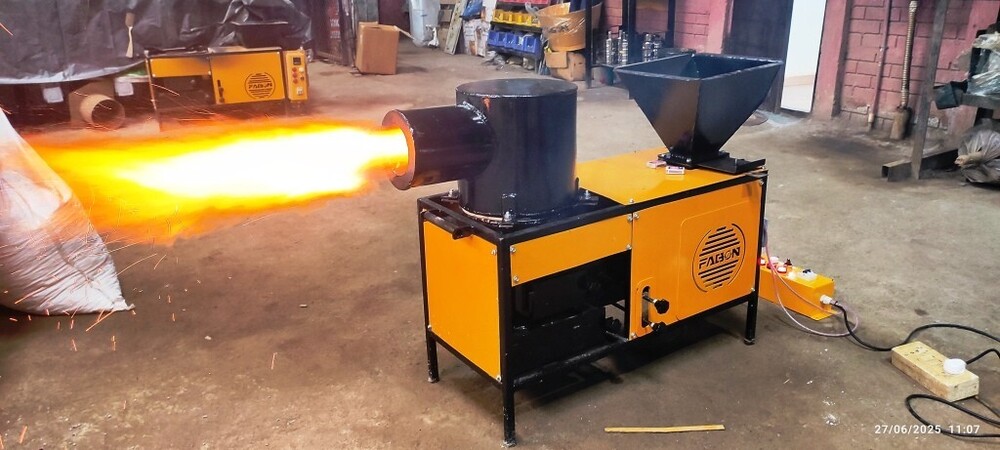
Working Principle:
- Pellet Feeding System
Pellets are automatically fed into the burner via a screw conveyor. - Ignition System
Electric ignition starts combustion. - Combustion Chamber
Pellets burn efficiently, generating high-temperature heat. - Air Supply System
Controlled airflow ensures complete combustion. - Heat Transfer
Heat is transferred to cooking vessels, boilers, or ovens. - Ash Collection
Minimal ash is collected and can be reused as fertilizer.
Types of Biomass Pellet Burners
🔥 1. Direct Flame Burner
- Flame directly contacts cooking vessel
- Ideal for commercial kitchens
🔥 2. Indirect (Hot Air) Burner
- Heat transferred via air
- Used in ovens and dryers
🔥 3. Water Jacket Burner
- Produces hot water or steam
- Used in boilers
Applications in Hotels & Commercial Kitchens
🍳 1. Cooking Applications
- Cooking food in bulk
- Frying, boiling, steaming
🍲 2. Catering & Food Processing
- Sweet shops
- Namkeen manufacturing
- Industrial kitchens
🏨 3. Hotels & Hostels
- Kitchen cooking
- Water heating
🍛 4. Cloud Kitchens & Central Kitchens
- High-volume cooking operations
Key Benefits of Biomass Pellet Burner
💰 1. Huge Cost Savings
👉 Fuel cost reduction up to 30–60% compared to LPG/diesel
🌱 2. Eco-Friendly Solution
- Low emissions
- Carbon-neutral fuel
- Supports sustainability goals
🔥 3. High Efficiency
- Uniform combustion
- High heat output
⚙️ 4. Automation & Ease of Use
- Automatic feeding
- Temperature control
- Less manual intervention
🧹 5. Clean Operation
- Low ash generation
- Minimal smoke
🚜 6. Supports Local Economy
- Uses agricultural waste
- Creates rural employment
Fuel Cost Comparison (2026)
| Fuel Type | Cost per Unit | Efficiency | Monthly Cost |
|---|---|---|---|
| LPG | High | Medium | Very High |
| Diesel | Very High | Medium | Extremely High |
| Electricity | High | High | High |
| Biomass Pellets | Low | High | Lowest |
ROI & Payback Period
💸 Typical Investment:
- Small kitchen burner: ₹1.5–3 Lakhs
- Industrial burner: ₹3–10 Lakhs
📊 Payback Period:
👉 3 to 12 months depending on usage
How to Select the Right Biomass Pellet Burner
✅ 1. Capacity Requirement
- Based on kitchen size
- Fuel consumption needs
✅ 2. Type of Application
- Cooking / Boiler / Oven
✅ 3. Automation Level
- Manual vs fully automatic
✅ 4. Space Availability
- Installation area
✅ 5. After-Sales Support
- Service availability is critical
Installation & Setup Requirements
- Proper ventilation
- Pellet storage area
- Electrical connection
- Safety measures
Maintenance Tips
🔧 Daily:
- Clean ash tray
- Check feeding system
🔧 Weekly:
- Inspect blower and motors
🔧 Monthly:
- Deep cleaning
- Check electrical systems
Common Problems & Solutions
| Problem | Cause | Solution |
|---|---|---|
| Low heat output | Poor pellets | Use high-quality pellets |
| Smoke issue | Improper airflow | Adjust blower |
| Feeding issue | Blockage | Clean screw feeder |
Business Opportunity in Biomass Burners
- High demand in hotels
- Growing market in Africa
- Distributorship opportunities
Why Choose FABON Engineering Pvt. Ltd.?
FABON is a leading manufacturer of:
- Biomass Pellet Burners
- Pellet Machines
- Complete Turnkey Projects
⭐ Key Advantages:
- High efficiency burners
- Customized design
- Strong after-sales support
- 1-year warranty
- Export-ready solutions
Future of Biomass Pellet Burners
- Increasing fuel prices
- Government support
- Industrial demand growth
👉 Biomass is the future of sustainable commercial cooking.
Conclusion
Biomass pellet burners are revolutionizing the hospitality industry by providing a cost-effective, eco-friendly, and efficient alternative to traditional fuels. For hotels, restaurants, and commercial kitchens, switching to biomass is not just a cost-saving decision—it’s a step toward sustainable business growth.
With the right equipment and support from trusted manufacturers like FABON Engineering, businesses can significantly reduce operational costs and improve efficiency.
FAQs
1. Is biomass burner safe for hotel kitchens?
Yes, it is safe with proper installation and ventilation.
2. How much can hotels save?
Up to 50–60% fuel cost savings.
3. What fuel is used?
Biomass pellets made from agro-waste.
4. Is maintenance difficult?
No, it requires minimal maintenance.