

Biomass Pellet Aluminum Melting Furnace – A Complete Guide to Sustainable Metal Casting.
Introduction
The aluminum industry is one of the most energy-intensive sectors in the world. Traditionally, aluminum melting furnaces have relied on fossil fuels such as LPG, diesel, natural gas, or coal to generate the high temperatures (660°C+) required to melt aluminum efficiently. While effective, these fuels come with high operating costs, volatile pricing, and significant environmental drawbacks like CO₂ emissions, SOx/NOx pollution, and rising carbon taxes.
In recent years, biomass pellets have emerged as a game-changing fuel for industrial furnaces, particularly for aluminum melting applications. A biomass pellet aluminum melting furnace combines modern combustion technology with carbon-neutral, renewable fuels, offering industries a cost-saving, eco-friendly alternative to traditional burners.
This blog explores everything you need to know about biomass pellet-based aluminum melting furnaces—from working principles, design, and efficiency to fuel cost comparisons, environmental benefits, government policies, and ROI calculations.
What is a Biomass Pellet Aluminum Melting Furnace?
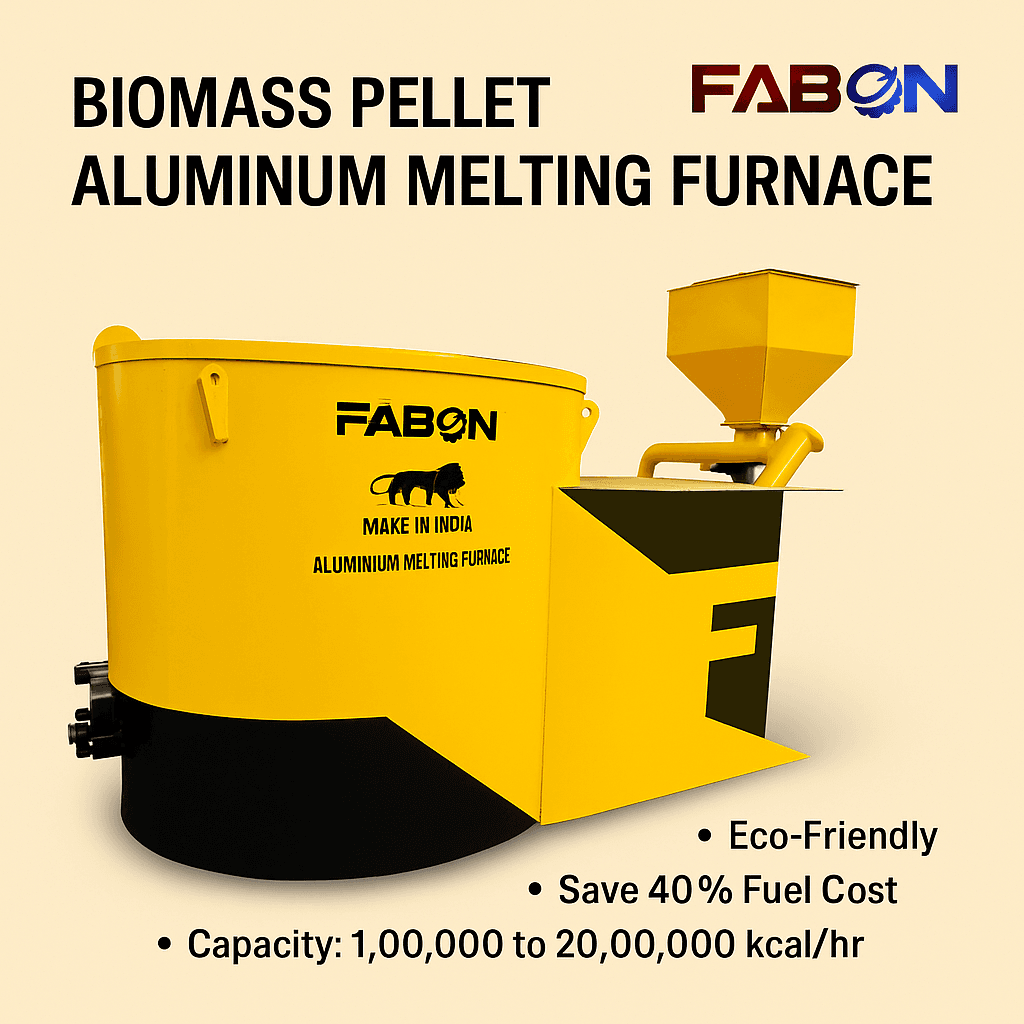
A biomass pellet aluminum melting furnace is an industrial heating system designed to melt aluminum using biomass pellets instead of fossil fuels. These furnaces are equipped with high-efficiency pellet burners, automatic feeding systems, temperature control panels, and smoke collectors for low-emission operation.
Key Features:
- Operates on biomass pellets (sawdust pellets, rice husk pellets, agro-waste pellets).
- Provides uniform heat for aluminum melting at 660–750°C.
- Can replace LPG, diesel, furnace oil, coal, or natural gas burners.
- Designed for foundries, casting industries, and recycling plants.
- 40–50% cost savings compared to fossil fuel-based furnaces.
- Eco-friendly & compliant with pollution control norms.
Working Principle of Biomass Pellet Furnaces
- Pellet Feeding – Biomass pellets are stored in a hopper and fed automatically into the furnace burner using a screw conveyor.
- Combustion – Inside the burner chamber, pellets undergo high-temperature combustion with controlled airflow, achieving >90% combustion efficiency.
- Heat Transfer – The generated heat transfers to the furnace chamber, raising the temperature high enough to melt aluminum ingots or scrap.
- Molten Metal Handling – Once aluminum reaches its liquid state, it is tapped and processed for casting, recycling, or alloying.
- Emission Control – A smoke collector/cyclone captures particulate matter, ensuring clean and safe operation.
Why Biomass Pellets for Aluminum Melting?
1. Fuel Cost Advantage
- LPG: ₹70–80/kg
- Diesel: ₹90–95/litre
- Furnace Oil: ₹65–70/litre
- Natural Gas (PNG): ₹55–60/kg
- Biomass Pellets: ₹12–18/kg
👉 Using biomass pellets cuts fuel costs by 40–50% for aluminum melting industries.
2. High Calorific Value (GCV)
- Biomass pellets provide 3500–4200 kcal/kg, enough for aluminum melting operations.
3. Carbon Neutral Fuel
- Unlike fossil fuels, biomass pellets emit no net CO₂ because they are made from renewable agricultural and forestry residues.
4. Government Push
- Coal is being restricted in many states.
- MNRE and state policies promote biomass adoption with subsidies.
- Carbon tax on fossil fuels is increasing.
5. Steady Supply of Raw Material
India produces millions of tons of agri-residues annually (rice husk, groundnut shell, sawdust, corn cob, Napier grass), ensuring continuous pellet availability.
Types of Aluminum Melting Furnaces Using Biomass
1. Crucible Furnaces
- Small foundries use biomass pellet burners with crucibles.
- Ideal for job work and small-scale aluminum casting.
2. Reverberatory Furnaces
- Large furnaces for mass melting operations.
- Biomass burners replace traditional diesel/LPG burners.
3. Tilting Furnaces
- Flexible design for alloying and recycling industries.
- Pellet burners provide uniform and consistent heating.
4. Rotary Furnaces
- Common in aluminum scrap recycling.
- Biomass burners reduce operating costs drastically.
Comparison: Biomass Pellet Furnace vs. Fossil Fuel Furnace
| Parameter | Biomass Pellet Furnace | LPG/Diesel Furnace | Coal Furnace |
|---|---|---|---|
| Fuel Cost (per 1 ton Al) | ₹6,000 – ₹8,000 | ₹14,000 – ₹18,000 | ₹12,000 – ₹14,000 |
| Emissions | Low, carbon-neutral | High CO₂ & SOx | High CO₂, ash, smoke |
| Efficiency | 85–90% | 80–85% | 70–75% |
| Automation | Fully automated | Semi-automated | Manual |
| Government Support | Yes (subsidies, policies) | No | Banned/restricted |
Energy & Efficiency Considerations
- Specific Energy Consumption: Biomass furnaces consume 1.4–1.6 tons of pellets per ton of aluminum melted, depending on furnace design.
- Combustion Efficiency: Modern FABON biomass burners achieve >90% efficiency.
- Heat Uniformity: The horizontal front-fire design ensures consistent heating, reducing dross formation.
Applications of Biomass Pellet Aluminum Melting Furnaces
- Aluminum Foundries – Casting automotive, aerospace, and industrial parts.
- Recycling Plants – Melting scrap into reusable ingots.
- Alloying Units – Producing aluminum alloys with specific properties.
- Food & Beverage Packaging – Melting aluminum for foil, cans, trays.
- Construction Industry – Extrusions, panels, structural parts.
Environmental Benefits
- CO₂ Reduction – Up to 70% less compared to diesel/LPG.
- Ash Content – Only 1–2% vs. 15–20% in coal.
- Air Quality – No sulfur, minimal nitrogen oxides.
- Waste Utilization – Converts agri-waste into industrial fuel.
Government Policies & Subsidies (India 2025)
- MNRE Biomass Energy Schemes – Subsidies for biomass-based industries.
- State-Level Policies – Restrictions on coal, incentives for biomass adoption.
- Carbon Credits – Industries using biomass qualify for carbon trading benefits.
- Pollution Control Norms – Biomass helps industries comply with CPCB & SPCB guidelines.
ROI & Business Case
- Investment: Furnace + Biomass Burner System = ₹15–20 lakh (medium scale).
- Fuel Savings: 40–50% vs fossil fuels.
- Payback Period: 6–12 months (depending on production).
- Long-Term Benefits: Lower OPEX, subsidy benefits, carbon credits.
FABON Biomass Pellet Burner Advantage
At FABON Engineering Pvt. Ltd., Nashik, we specialize in biomass pellet burners for aluminum melting furnaces.
Our USP:
- 1,00,000 to 20,00,000 kcal/hr capacity.
- Horizontal front-fire design.
- Digital control panel with automation.
- Smoke collector for clean emissions.
- Compatible with foundries, furnaces, ovens, dryers.
- After-sales support + spare availability.
👉 Learn more: FABON Biomass Pellet Burner
Future of Biomass in Aluminum Melting
The future is green metallurgy. With coal bans, LPG price hikes, and global carbon neutrality goals, the aluminum industry is rapidly shifting toward biomass-based furnaces. Countries like India, China, and Europe are leading this transition.
By 2030, it is expected that 30–40% of aluminum melting worldwide will use renewable biomass fuels.
SEO Keywords for Ranking
- Biomass pellet aluminum melting furnace
- Aluminum melting with biomass pellets
- Biomass pellet burner for foundry
- Biomass fuel vs LPG for aluminum
- Aluminum recycling furnace biomass
- Eco-friendly aluminum melting furnace
- Biomass furnace manufacturers India
- FABON biomass pellet furnace
Conclusion
A biomass pellet aluminum melting furnace is not just an alternative to fossil fuels—it is the future of sustainable metallurgy. With cost savings, eco-friendly operation, and government backing, industries adopting biomass are gaining a competitive edge while contributing to a cleaner, greener planet.
FABON Engineering, with its ISO-certified biomass burners and complete furnace solutions, is committed to powering a greener tomorrow for aluminum industries across India and beyond.