

“APPLICATION OF BIOMASS PELLET IN NUMKEEN AND FOOD INDUSTRIES”
1. Introduction
Energy costs and sustainability concerns are reshaping how Numkeen, Snack, Sweets, and Food Processing Industries operate today. Heating, drying, roasting, steaming, and baking consume huge amounts of thermal energy. Traditionally, industries depend on diesel, LPG, CNG, and furnace oil—fuels that are costly, unstable in price, and environmentally harmful.
Biomass pellets have emerged as the most reliable, cost-effective, and eco-friendly fuel alternative for the numkin and food industry.
This detailed guide explains how biomass pellets are used in the food sector, along with cost reduction benefits, application areas, and why FABON machines are the preferred choice for industrial pellet production.
2. What Are Biomass Pellets?
Biomass pellets are small cylindrical fuel produced from:
- Sawdust
- Wood chips
- Agricultural waste
- Groundnut shells
- Sugarcane bagasse
- Rice husk
- Corn cobs
- Sunflower waste
Pellets burn cleaner and generate stable heat, making them ideal for food processing applications that demand controlled temperature.
Typical GCV: 3500–4200 kcal/kg
Moisture: <10%
Ash: 1–8% depending on raw material
3. Why the Numkin & Food Industries Are Shifting to Biomass Pellets
The shift is driven by:
✔ High LPG/Diesel/Furnace Oil cost
✔ Stable operating temperature requirement
✔ Government promoting biomass usage
✔ Reduction in carbon footprint
✔ Lower production cost per kg of processed food
✔ Easy implementation in existing burners/boilers
4. Energy Challenges in Numkin & Food Industries
Numkin and ready-to-eat snack industries face:
- High frying temperatures (160–220°C)
- Continuous production across 20–24 hours
- Fluctuating LPG prices
- High steam & hot air demand
- Government pressure to reduce carbon emissions
Biomass pellets solve these challenges with stable, high-temperature output.
5. Major Applications of Biomass Pellets in Numkin & Food Sector
✔ Frying
✔ Roasting
✔ Baking
✔ Steaming
✔ Drying
✔ Hot Air Generation
✔ Hot Water Generation
✔ Boiler Heating
✔ Tray Dryer Heating
✔ Rotary Dryer Heating
Pellets are suitable for almost every thermal process used in food factories.
6. Biomass Pellet Boilers for Food Processing
Boilers are the backbone of steam heating operations. Biomass pellets can replace:
- FO-fired boilers
- Diesel-fired boilers
- LPG/CNG-fired boilers
Advantages of Using Biomass Pellets in Boilers
- Higher thermal efficiency
- Clean combustion
- Low ash handling
- Reduced carbon emissions
- 40–60% lower running cost
- Quick payback period of 3–8 months
This is why many food and snack companies are shifting to biomass-based steam boilers.
7. FABON Biomass Pellet Burners for Numkin & Food Factories
FABON Engineering manufactures high-performance pellet burners suitable for:
- Namkin Fryers
- Kurkure & Extruder Lines
- Bakery Ovens
- Roasters
- Boilers
- Hot Air Generators
FABON Pellet Burner Types
- Front Fire Burner
- Vertical Pellet Burner
- Horizontal Pellet Burner
- Fully Automatic Pellet Burner with PLC
Unique FABON Burner Features
- Temperature accuracy ±5°C
- Fully automatic fuel feeding
- High thermal output up to 30 lakh kcal/hr
- Low maintenance design
- Clean combustion and smooth flame
- Long life ignition chamber
- High-quality MS/SS body
FABON pellet burners offer the perfect balance of efficiency, safety, and reliability for food-grade heating.
8. Steam Generation & Hot Air Generation Using Biomass Pellets
Food factories need steam at 4–12 bar for:
- Cooking
- Sterilization
- Pasteurization
- Cleaning processes
- Blanching
- Drying
Pellet-based boilers provide consistent steam with excellent pressure stability.
Benefits
- Continuous steam without fluctuation
- Low operational cost
- Easy conversion from diesel/LPG
Hot Air Generators (HAGs) using pellets also support:
- Drying of roasted namkin
- Dehydration
- Heat circulation for ovens
- Tray dryer operations
9. Frying, Baking & Roasting Applications
Frying Lines
Snack & numkin companies require high temperature, uninterrupted frying. Biomass pellets maintain:
- 170–220°C stable temperature
- Uniform heat distribution
- Reduced fuel cost by up to 60%
Baking
Bakeries, biscuit manufacturers, and snack plants use pellet systems for continuous baking operations.
Roasting
Ideal for:
- Peanuts
- Chana
- Namkin
- Spices
- Grains
Pellets ensure smokeless, odor-free, food-safe heating.
10. Drying Applications in Food Industries
FABON pellet burners can be used in:
- Tray Dryers
- Rotary Dryers
- Conveyor Dryers
- Hot Air Chambers
Drying is required for:
- Herbs
- Spices
- Moraiyo
- Sabudana
- Cereals
- Namkin
- Pulses
- Flour products
Uniform hot air ensures faster drying and higher product quality.
11. Hot Water Systems in Food & Beverage Industries
Large factories need hot water for:
- Cleaning & sanitation
- Ingredient preparation
- Processing
- General utility
Pellet-based heating systems reduce operating costs significantly compared to diesel-based water heaters.
12. Hygienic & Safe Heating Advantages
Biomass pellets are:
- Odorless
- Non-toxic
- Food safe
- Produce clean heat
They comply with food safety norms like FOOD GRADE PROCESS COMPLIANCE when used with FABON burners.
13. Cost Savings & ROI After Switching to Biomass Pellets
Average cost comparison:
| Fuel | Cost per kg/ltr | Calorific Value | Cost per 1,00,000 kcal |
| LPG | ₹90–110/kg | 11,000 kcal | ₹900–1,100 |
| Diesel | ₹90–100/ltr | 10,500 kcal | ₹850–950 |
| FO | ₹70–85/ltr | 10,000 kcal | ₹700–850 |
| Biomass Pellets | ₹12–18/kg | 3,800–4,200 kcal | ₹300–350 |
Cost Reduction: 50–70%
Payback Period: 3–6 months
Industries achieve massive fuel cost reduction, faster production, and enhanced profits.
14. Environmental Benefits
- 90% reduction in carbon emissions
- No SOx and very low NOx emissions
- Zero ash disposal problem in high-quality pellets
- Aligns with ISO 14001, sustainability & ESG goals
- Suitable for green manufacturing certification
15. Why FABON Machines Are Best for Numkin & Food Industry
FABON Engineering provides a complete pellet energy solution:
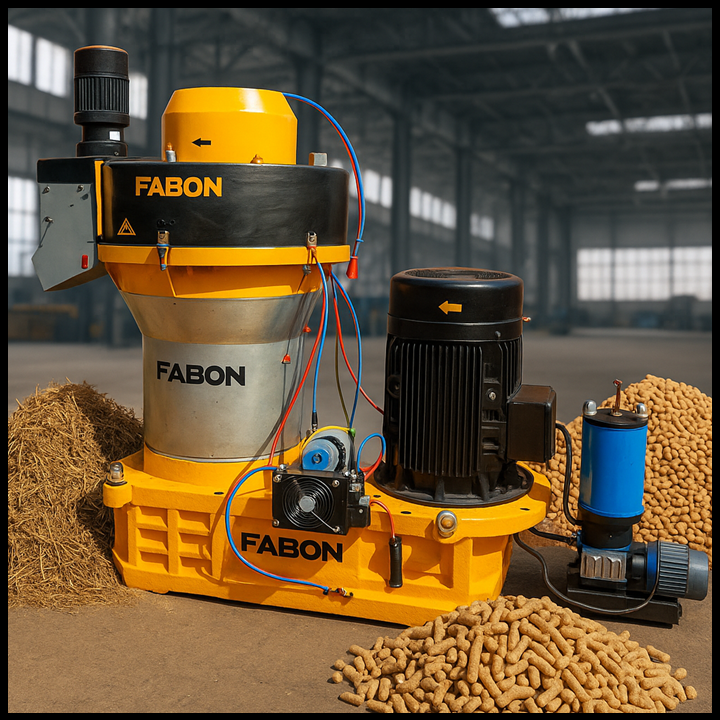
✔ Biomass Pellet Machines (Flat Die & Ring Die)
✔ Biomass Pellet Burners
✔ Conveyor Systems
✔ Horizontal/Flash/Rotary Dryers
✔ Hammer Mills
✔ Sawdust Machines
FABON solutions are:
- Robust
- Energy efficient
- Built for 24-hour operations
- Low maintenance
- Designed for industrial load
- Backed by strong after-sales support
16. FABON Pellet Machines – Features & Specifications
Ring Die Pellet Machines
- Capacity: 1 TPH to 5 TPH
- Die Material: Alloy Steel
- Motor: 75 HP – 160 HP
- Heavy-duty gearbox
- Continuous automatic lubrication system
Flat Die Pellet Machines
- Capacity: 100–1000 kg/hr
- Perfect for food industry captive energy needs
- Simple design
- Low operational cost
17. Case Study: Fuel Cost Analysis for Namkin Factory (Realistic Data)
Factory Requirement
- Fryer Capacity: 200 kg/hour
- Operating: 20 hours per day
- Energy Required: 5,00,000 kcal/hour
Cost Comparison
- LPG cost/day: ₹50,000 – ₹60,000
- Diesel cost/day: ₹35,000 – ₹45,000
- Biomass pellet cost/day: ₹15,000 – ₹18,000
Daily Savings: ₹20,000–₹40,000
Annual Savings: ₹72 lakh – ₹1.4 crore
18. Certifications & Quality Standards for Food Industry
FABON machines comply with:
- ISO 9001
- CE design standards
- GMP guidelines for hygiene
- Food grade safety requirements
- Environmental standards
19. How to Set Up a Biomass Pellet System for a Numkin Factory
Step-by-step
- Analyze heat load
- Select pellet burner or boiler capacity
- Install pellet storage
- Connect to fryer/oven/dryer
- Automatic feeding system setup
- Train operators
- Start continuous production
FABON provides complete turnkey setup support.
20. Conclusion
Biomass pellets are revolutionizing the Numkin and Food Processing Industries by offering:
- Huge cost savings
- Cleaner and sustainable heating
- Continuous, high-temperature heat
- Safer food-grade operations
FABON Engineering offers complete pellet production and pellet burner solutions tailored for snack, namkin, bakery, and food factories.
Switch to FABON pellet systems and reduce fuel costs by up to 70% while increasing production efficiency.
21. FAQs
1. Are biomass pellets safe for food industry use?
Yes, pellets burn cleanly and produce food-safe heat.
2. Can I convert my LPG fryer to a biomass pellet burner?
Yes, FABON provides conversion systems suitable for fryers, ovens, and boilers.
3. What is the average pellet consumption?
1 kg pellet generates ~4,000 kcal. Burner capacity decides consumption.
4. Can FABON install complete pellet systems?
Yes. FABON provides turnkey solutions including machines, burners, conveyors, and dryers.
5. What is the ROI of switching to biomass pellets?
Typically, 3–6 months depending on fuel usage.