

Flash Dryer vs Rotary Dryer Comparison

Flash Dryer vs Rotary Dryer – Complete Comparison Guide for Biomass, Industrial, and Agro Material Drying
Introduction: Why Choosing the Right Dryer Is Critical for Biomass and Industrial Production
Drying is one of the most important processes in biomass pellet production, briquette manufacturing, animal feed production, and many other industrial applications. The efficiency of the drying system directly affects:
- Final product quality
- Production capacity
- Fuel consumption
- Operating cost
- Overall plant profitability
Two of the most widely used drying technologies in biomass and industrial sectors are:
- Flash Dryer
- Rotary Dryer
Both have their own advantages, limitations, and specific applications.
Selecting the wrong dryer can increase fuel consumption by 30–50%, reduce plant efficiency, and increase operating costs significantly.
This guide provides a detailed, technical, and practical comparison between flash dryer and rotary dryer to help plant owners, engineers, and investors make the right decision.
Chapter 1: What is a Flash Dryer?
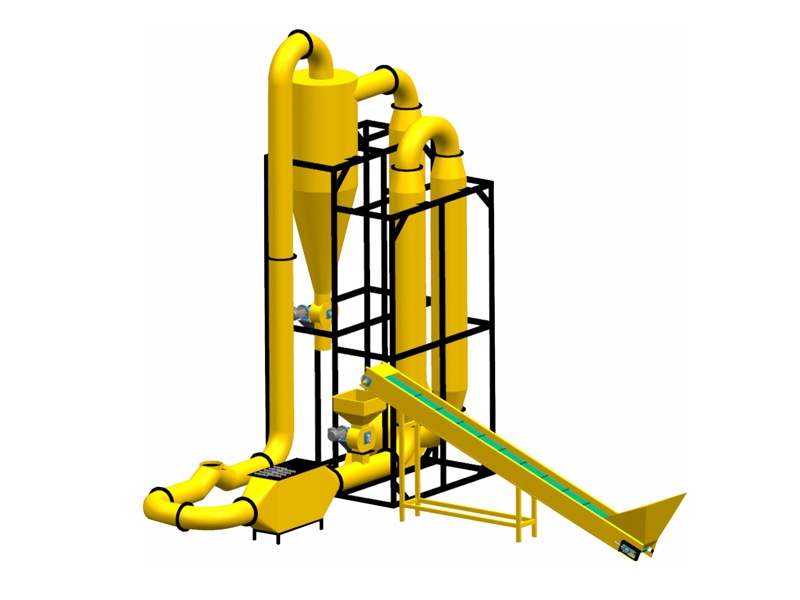
Definition
A flash dryer is a type of pneumatic drying system that uses high-temperature air and high-velocity airflow to dry small and lightweight materials in a very short time.
Material is carried through pipes using hot air, and moisture evaporates instantly.
Drying time is only a few seconds.
Working Principle
The flash dryer works based on:
High-speed hot air
Airflow transportation
Instant moisture evaporation
Process steps:
Wet material enters dryer
Hot air mixes with material
Material travels through pipeline
Moisture evaporates quickly
Dry material separates in cyclone
Main Components
Furnace
Blower
Drying pipe
Cyclone separator
Dust collector
Flash Dryer Temperature
Typically:
150°C to 400°C
Flash Dryer Capacity
Ranges from:
500 kg/hr to 10 TPH
Chapter 2: What is a Rotary Dryer?
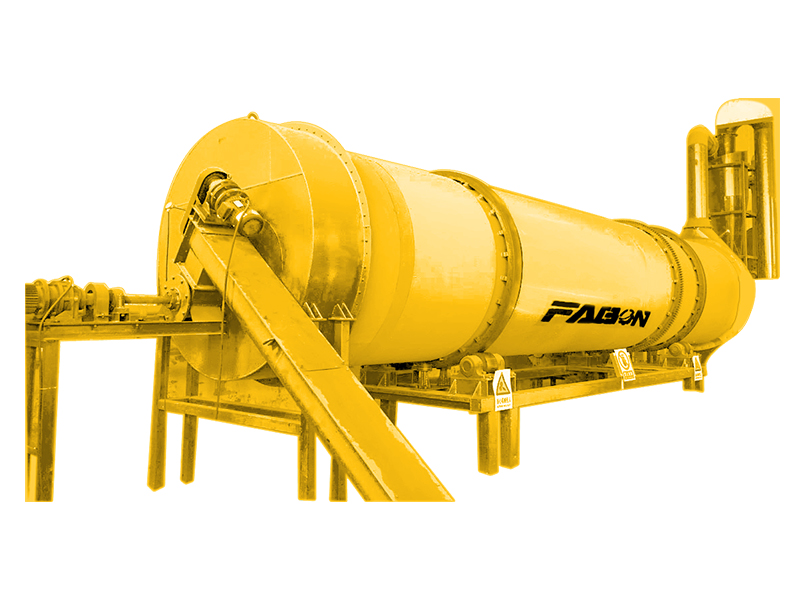
Definition
A rotary dryer is a large rotating drum used to dry biomass materials using hot air.
Material rotates slowly inside the drum.
Drying time is longer compared to flash dryer.
Working Principle
Material enters rotating drum
Hot air passes through drum
Material rotates and dries gradually
Dry material exits from other end
Main Components
Drum
Furnace
Blower
Cyclone
Support rollers
Rotary Dryer Temperature
150°C to 600°C
Capacity
1 TPH to 50 TPH
Chapter 3: Major Differences Between Flash Dryer and Rotary Dryer
| Parameter | Flash Dryer | Rotary Dryer |
|---|---|---|
| Drying Time | Seconds | Minutes |
| Material Size | Small | Large |
| Capacity | Medium | Very High |
| Installation Cost | Low | High |
| Power Consumption | Low | High |
| Space Required | Small | Large |
| Moisture Handling | Medium | Very High |
| Maintenance | Low | Medium |
Chapter 4: Raw Material Suitability
Flash Dryer best for:
Sawdust
Rice husk
Powder
Small particles
Rotary Dryer best for:
Wood chips
Bagasse
Napier grass
Large particles
Chapter 5: Moisture Reduction Comparison
Flash Dryer:
Reduce moisture:
35% to 10%
Rotary Dryer:
Reduce moisture:
50% to 10%
Rotary dryer is better for very wet material.
Chapter 6: Fuel Consumption Comparison
Flash dryer uses:
Less fuel
Rotary dryer uses:
More fuel
But rotary dryer handles more moisture.
Chapter 7: Installation Cost Comparison
Flash Dryer Cost:
Lower
Rotary Dryer Cost:
Higher
Rotary dryer requires:
Large structure
Heavy foundation
Chapter 8: Space Requirement
Flash Dryer:
Compact design
Rotary Dryer:
Large space required
Chapter 9: Power Consumption
Flash Dryer:
Lower power
Rotary Dryer:
Higher power
Chapter 10: Production Capacity
Flash Dryer:
Up to 10 TPH
Rotary Dryer:
Up to 50 TPH
Rotary dryer better for large plant.
Chapter 11: Maintenance Comparison
Flash Dryer:
Low maintenance
Rotary Dryer:
Medium maintenance
Chapter 12: Efficiency Comparison
Flash Dryer efficiency:
High for small material
Rotary Dryer efficiency:
High for large material
Chapter 13: Biomass Pellet Plant Recommendation
Flash Dryer recommended for:
Sawdust pellet plant
Rotary Dryer recommended for:
Napier grass pellet plant
Chapter 14: Industrial Applications
Flash Dryer Applications
Biomass pellet plant
Animal feed
Chemical industry
Rotary Dryer Applications
Biomass pellet plant
Mining
Cement industry
Chapter 15: Advantages and Disadvantages
Flash Dryer Advantages
Fast drying
Low cost
Compact
Flash Dryer Disadvantages
Not suitable for large material
Rotary Dryer Advantages
Handle all material
Rotary Dryer Disadvantages
High cost
Chapter 16: Which Dryer is Best?
For small pellet plant:
Flash dryer
For large pellet plant:
Rotary dryer
Chapter 17: Cost Comparison Example
Flash Dryer Cost:
Lower investment
Rotary Dryer Cost:
Higher investment
But higher production
Chapter 18: Life and Durability
Both dryers have long life.
Rotary dryer has longer life.
Chapter 19: Future of Drying Technology
Flash dryer demand increasing.
Rotary dryer still best for large industry.
Chapter 20: Conclusion
Flash Dryer Best For:
Small plant
Sawdust
Rotary Dryer Best For:
Large plant
Napier grass
Both are important machines.
For Biomass Dryer Plant
FABON Engineering Pvt Ltd
9370999191
9226719191
9226339191