

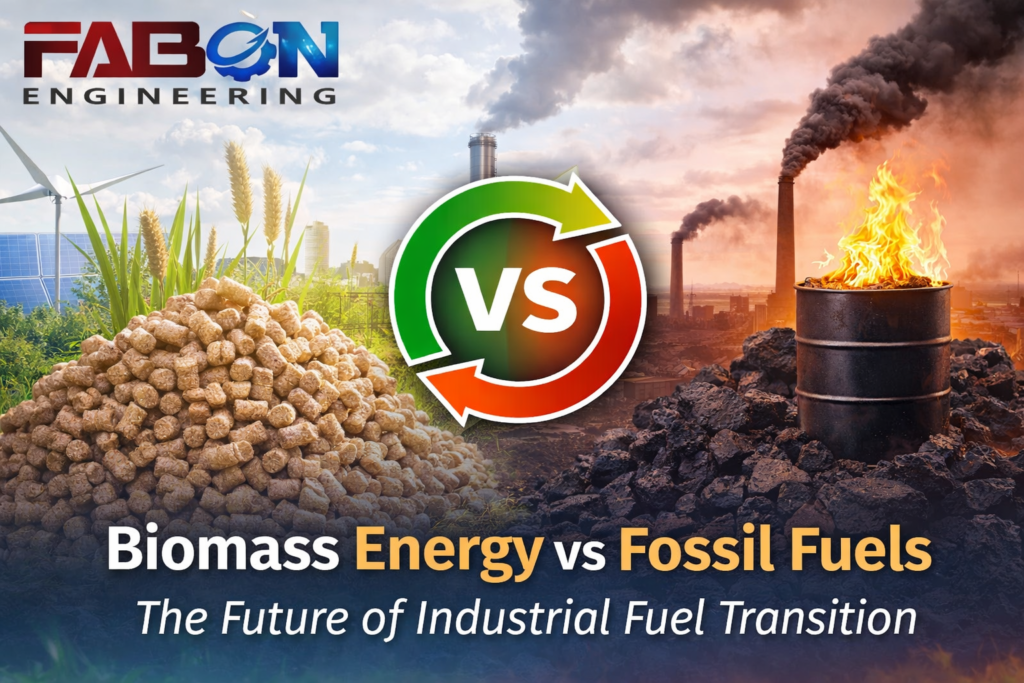
Biomass Energy vs Fossil Fuels: The Future of Industrial Fuel Transition (2026 Guide)
Introduction
Energy is the backbone of modern industry. Every manufacturing plant, processing unit, power plant, and industrial facility requires a reliable source of fuel to generate heat, electricity, or steam. For more than a century, fossil fuels such as coal, diesel, LPG, furnace oil, and natural gas have been the dominant energy sources powering global industry.
However, growing environmental concerns, rising fuel costs, and international climate commitments are forcing industries to rethink their energy strategies. Governments and businesses worldwide are now focusing on renewable and sustainable alternatives, among which biomass energy has emerged as one of the most promising solutions.
Biomass energy refers to energy generated from organic materials such as agricultural waste, forestry residues, sawdust, wood chips, rice husk, bagasse, and energy crops. These materials can be processed into biomass pellets, briquettes, biofuels, and biogas, which are used as fuel for boilers, furnaces, and power plants.
The transition from fossil fuels to biomass energy is gaining momentum because biomass is renewable, locally available, and capable of reducing greenhouse gas emissions. Many experts believe that biomass will play a major role in the global energy system of the future.
This article explores the differences between biomass energy and fossil fuels, comparing their cost, efficiency, environmental impact, and industrial applications. It also examines why biomass is becoming a key fuel for industrial energy transition.
1. Understanding Fossil Fuels
Fossil fuels are energy sources formed from ancient organic matter that has been compressed and transformed under high pressure and temperature over millions of years. The most common fossil fuels include:
- Coal
- Petroleum (diesel, gasoline, furnace oil)
- Natural gas
- LPG
These fuels have powered industrial growth since the Industrial Revolution because they are energy-dense and easy to transport.
Major Advantages of Fossil Fuels
High Energy Density
Fossil fuels contain a large amount of energy per unit mass, making them efficient for high-energy industrial processes.
Established Infrastructure
Coal mines, oil refineries, pipelines, and fuel distribution networks are already well developed worldwide.
Reliable Energy Supply
Fossil fuels can provide continuous energy regardless of weather conditions.
Limitations of Fossil Fuels
Despite their advantages, fossil fuels have several critical drawbacks.
Environmental Pollution
Burning fossil fuels releases carbon dioxide (CO₂), sulfur dioxide (SO₂), nitrogen oxides (NOx), and particulate matter, which contribute to climate change and air pollution.
Finite Resources
Fossil fuels are non-renewable resources formed over millions of years. Once depleted, they cannot be quickly replaced.
Price Volatility
Fuel prices fluctuate based on global supply chains, geopolitical tensions, and energy demand.
Regulatory Pressure
Governments are imposing stricter emission regulations and carbon taxes on fossil-fuel-based industries.
These challenges are pushing industries to explore renewable alternatives such as biomass.
2. Understanding Biomass Energy
Biomass energy is produced from organic materials derived from plants and animals. These materials contain stored solar energy captured through photosynthesis.
Common biomass fuels include:
- Wood chips
- Agricultural residues
- Sawdust
- Rice husk
- Bagasse
- Cotton stalk
- Napier grass
- Biomass pellets
- Biomass briquettes
These fuels can be burned directly or converted into biofuels, syngas, or biogas.
Biomass is considered renewable because new plants can absorb carbon dioxide from the atmosphere and regenerate the fuel source.
3. Types of Biomass Fuels Used in Industry
Biomass Pellets
Biomass pellets are compressed cylindrical fuel made from sawdust, wood waste, or agricultural residues.
Characteristics:
- High density
- Uniform size
- Low moisture
- High combustion efficiency
Pellets are widely used in industrial boilers and power plants.
Biomass Briquettes
Briquettes are compressed blocks of biomass waste used as a substitute for coal.
Industries use briquettes because they:
- Produce lower emissions
- Provide consistent heat
- Reduce fuel costs
Some studies suggest briquettes can reduce boiler fuel costs by 30–40% compared with coal in certain applications.
Agricultural Residues
These include materials such as:
- Rice husk
- Wheat straw
- Corn cob
- Bagasse
These wastes are converted into energy instead of being burned or discarded.
4. Industrial Applications of Biomass Energy
Biomass energy is widely used across various industries.
Thermal Power Plants
Biomass pellets and briquettes can replace coal in power generation.
Textile Industry
Used for steam generation in boilers.
Food Processing
Provides heat for drying and processing.
Chemical and Pharmaceutical Industry
Used in process heating and steam generation.
Cement and Steel
Co-firing biomass with coal reduces carbon emissions.
In India, many industries are now replacing coal with biomass pellets to reduce fuel costs and carbon emissions.
5. Biomass Energy vs Fossil Fuels: Efficiency Comparison
Energy efficiency is a critical factor for industrial fuel selection.
| Fuel Type | Heating Efficiency |
|---|---|
| Biomass Pellets | 70–90% |
| Coal | 60–75% |
| Natural Gas | 85–95% |
| Fuel Oil | 80–90% |
Modern biomass pellet systems can achieve efficiency levels comparable to fossil fuels when properly designed.
This improvement in efficiency has been made possible through:
- Pelletization technology
- Advanced biomass burners
- Automated combustion systems
6. Environmental Impact Comparison
Fossil Fuels
Burning fossil fuels releases large quantities of greenhouse gases.
Major environmental issues include:
- Climate change
- Air pollution
- Acid rain
- Global warming
Coal power plants are among the largest sources of carbon emissions.
Biomass Energy
Biomass is considered carbon-neutral because plants absorb carbon dioxide during growth, which offsets the emissions released during combustion.
Advantages include:
- Lower greenhouse gas emissions
- Reduced sulfur emissions
- Lower particulate pollution
- Waste recycling
Because of these benefits, biomass is increasingly seen as an environmentally responsible energy source.
7. Economic Comparison: Biomass vs Fossil Fuels
Fuel cost is one of the most important factors for industrial energy decisions.
Fossil Fuel Costs
Fossil fuel prices are influenced by:
- Global oil markets
- Geopolitical conflicts
- Supply chain disruptions
- Currency exchange rates
These factors cause frequent price fluctuations.
Biomass Fuel Costs
Biomass fuels are usually sourced locally from agricultural or forestry residues.
Benefits include:
- Stable pricing
- Local availability
- Reduced transportation costs
In many industrial heating applications, biomass pellets can significantly reduce energy costs compared with diesel or LPG.
8. Energy Security and Local Economy
One of the biggest advantages of biomass energy is energy independence.
Fossil Fuel Dependency
Many countries rely on imported fossil fuels.
This creates risks such as:
- Supply disruptions
- Price shocks
- Trade imbalances
Biomass Energy Security
Biomass energy uses locally available resources such as agricultural residues and forestry waste.
This helps:
- Strengthen rural economies
- Reduce fossil fuel imports
- Create local employment
9. Global Biomass Energy Market Trends
Modern bioenergy is already the largest source of renewable energy globally, accounting for a significant share of renewable energy supply.
Several countries are investing heavily in biomass energy.
Examples include:
- Sweden
- Finland
- Denmark
- Brazil
- India
- United States
These countries are promoting biomass for power generation, industrial heating, and biofuel production.
10. Government Policies Supporting Biomass
Many governments are encouraging biomass energy adoption.
Policies include:
Carbon Reduction Targets
Countries aim to reduce greenhouse gas emissions.
Renewable Energy Incentives
Subsidies and tax benefits support biomass projects.
Biofuel Mandates
Blending biofuels with fossil fuels reduces emissions.
Carbon pricing policies also make biomass more competitive compared with fossil fuels.
11. Challenges of Biomass Energy
Despite its advantages, biomass energy has several challenges.
Supply Chain Management
Collecting and transporting biomass can be complex.
Storage Requirements
Biomass fuels require proper storage to prevent moisture absorption.
Ash Disposal
Biomass combustion produces ash that must be managed.
Initial Investment
Installing biomass boilers or pellet plants requires capital investment.
Some reports also note that biomass costs may increase due to collection, processing, and transportation expenses.
However, technological improvements are gradually addressing these challenges.
12. Technological Innovations in Biomass Energy
Modern technologies are improving biomass efficiency and usability.
Examples include:
Torrefaction
A thermal process that increases biomass energy density and improves fuel properties.
Pelletization
Converts loose biomass into dense pellets for efficient combustion.
Gasification
Converts biomass into syngas used for electricity generation.
Automated Biomass Burners
Provide efficient and controlled combustion.
These technologies are making biomass competitive with fossil fuels.
13. Biomass and Industrial Decarbonization
Industries such as steel, cement, chemicals, and power generation are difficult to decarbonize.
Biomass offers a practical solution for these sectors because it can:
- Replace coal in boilers
- Reduce carbon emissions
- Provide renewable heat energy
Bioenergy is considered essential for reducing emissions in industries where electrification is difficult.
14. Future of Industrial Fuel Transition
The global energy transition is accelerating due to climate commitments and technological innovation.
Future trends include:
Increased Biomass Co-Firing
Coal power plants blending biomass with coal.
Industrial Biomass Boilers
Replacing fossil fuel boilers.
Waste-to-Energy Systems
Converting agricultural waste into fuel.
Biofuel Production
Biomass converted into liquid fuels for transportation.
Experts predict that bioenergy will play a crucial role in achieving net-zero emissions by 2050.
15. Biomass Energy in India
India has enormous biomass potential due to its large agricultural sector.
Major biomass resources include:
- Rice husk
- Bagasse
- Cotton stalk
- Mustard husk
- Groundnut shells
The Indian government is promoting biomass energy through:
- National Bioenergy Mission
- Biomass co-firing in thermal power plants
- Waste-to-energy programs
These initiatives aim to reduce coal dependence and improve energy sustainability.
Conclusion
The comparison between biomass energy and fossil fuels highlights a major transformation occurring in the global energy landscape. While fossil fuels have powered industrial development for decades, their environmental impact, price volatility, and limited availability are pushing industries to explore renewable alternatives.
Biomass energy offers a compelling solution. It is renewable, widely available, and capable of reducing greenhouse gas emissions while supporting local economies. Modern technologies such as pelletization, briquetting, and gasification have significantly improved biomass efficiency, making it competitive with traditional fuels.
As industries seek to reduce carbon emissions and improve energy security, biomass is expected to become a key component of the future industrial fuel mix. With strong government support, technological advancements, and growing environmental awareness, the transition from fossil fuels to biomass energy is not just possible—it is already underway.
The future of industrial energy will likely involve a combination of renewable sources, and biomass will play a central role in creating a cleaner, more sustainable, and economically viable energy system.